Showing posts with label neurosurgery. Show all posts

Monday, 6 June 2016

Neuroscience Medicine: The Time Has Come

As basic and clinical sciences advance, it becomes increasing important to understand the role of multidisciplinary efforts in scientific progress. 

In this post, I propose rethinking and renaming the medically-related neuroscience disciplines into a new specialty called neuroscience medicine.

Basic neuroscience research has evolved and emerged as a powerful discipline due to the increasing use of multidisciplinary research teams. Basic neuroscience involves collaboration of various scientific disciplines including (but not limited to):
  • molecular biology
  • genetics
  • cognitive science
  • psychology
  • statistics
  • brain imaging

In a similar multidisciplinary manner, I propose thinking of neuroscience medicine as the following medical specialties:

Core specialties
  • Psychiatry
  • Neurology
Supporting specialties
  • Neurosurgery
  • Neuroradiology
  • Neuropathology
  • Neuropsychology
  • Psychotherapy
  • Neuropharmacology

Psychiatry and neurology are core specialties as they represent the primary clinical disciplines involved in the diagnosis and treatment of the key brain disorders including schizophrenia, bipolar disorder, seizure disorder, traumatic brain injury.

This proposal is not novel or without significant previous thoughtful discussion by leaders in science and medicine.

Most notably, then director of NIMH Dr. Thomas Insel published a commentary on the specialty of psychiatry as a clinical neuroscience discipline.  In this commentary he noted how mental disorders can be best seen as complex genetic disorders.  Mental disorders appear to involve gene-environment interactions. He emphasizes that psychiatry's impact on public health "will require that mental disorders be understood and treated as brain disorders". 

Others have argued for the integration if not merging of neurology and psychiatry into a neuropsychiatry discipline. I think neuroscience medicine is a better term for the combination of these two disciplines. I also think neuroscience medicine is better than the alternative of clinical neuroscience. Most lay individuals do not know what clinical means.

In a previous post, I highlighted a recent review of the future of basic neuroscience education calling for enhanced direct interaction between basic neuroscience and the clinical neuroscience. A medical specialty called neuroscience medicine would be a great format for integration and collaboration with basic neuroscience training and research.

The blog format does not allow for a more extensive post covering important implications of this proposal such as training, transition from current models, multidisciplinary research models or financial barriers or incentives. I will leave these topics to some future posts or other forums.

However, I do think names make a difference and I think Neuroscience Medicine has some significant advantages over some of our current structure of medical training and clinical care models. 

The time has come. It is a time of tremendous opportunities to advance the diagnosis and treatment of brain disorders. Neuroscience medicine is a new concept that holds promise for how we conceptualize and organize our multidisciplinary efforts to reduce the burden of brain disorder around the world. 

Like my new Neuroscience Medicine Facebook page to join the discussion HERE.

Follow the author on Twitter WRY999

Graphic of Neuroscience Medicine is an original by the author.

Insel, T. (2005). Psychiatry as a Clinical Neuroscience Discipline JAMA, 294 (17) DOI: 10.1001/jama.294.17.2221

Tuesday, 31 May 2016

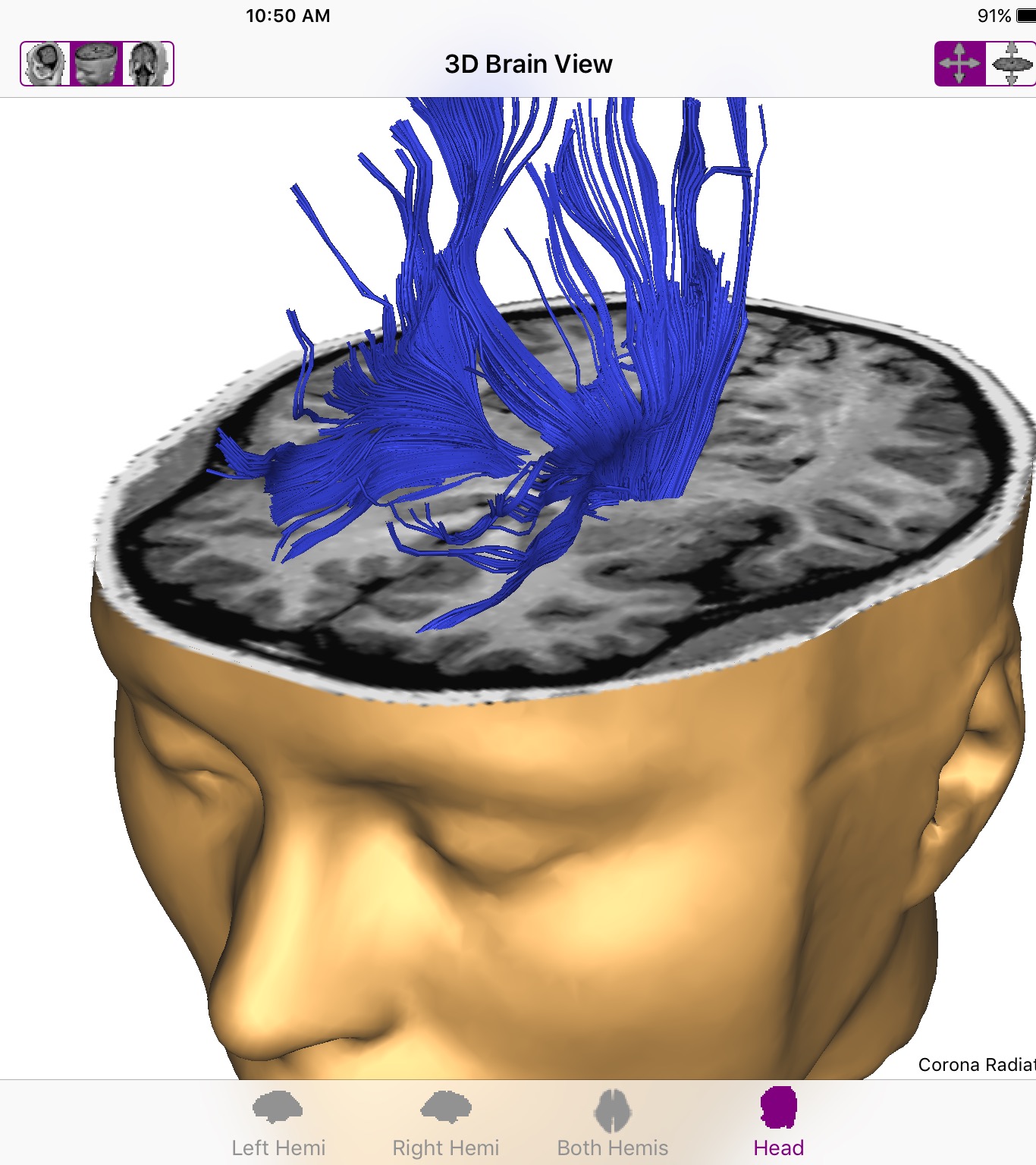
The Promise of DTI (Imaging) in Neurology

Brain diffusion tensor imaging (DTI) is emerging as new important brain imaging tool in research.

Clinicial applications of DTI are lagging the research applications in development.

However, clinical applications are coming.

The Radiological Society of North America recently published a summary of potential application for DTI in Neurology on their website. You can access the website post HERE.

Three key areas were highlighted in this post including use of DTI for:
  • Aiding Identification of Prognosis in Mild TBI
  • Gender Effects on Sports-Related Head Injury
  • Brain Mapping Neurosurgery

Included at the website are two You Tube Videos. Here is the video related to using DTI as a prognostic aid in TBI.


Dr. ML Lipton featured in the You Tube video has a free full-text published a study of DTI in soccer heading in the manuscript cited below. Click on the PMID to get to the manuscript.

In this manuscript the authors were able to identify change in white matter brain microstructure related to prevalence of soccer heading independent of concussion.

Image of white matter corona radiata is my screen shot from the iPad app Brain Tutor.

Follow me on Twitter WRY999

Lipton ML, Kim N, Zimmerman ME, Kim M, Stewart WF, Branch CA, & Lipton RB (2013). Soccer heading is associated with white matter microstructural and cognitive abnormalities. Radiology, 268 (3), 850-7 PMID: 23757503


Wednesday, 8 August 2012

Now at Penn: Gamma Knife® Perfexion™

Gamma Knife® Perfexion™ is the latest form of precision radiation therapy for treating cancer. This non-surgical treatment uses 192 sources of radiation to precisely target tumors, lesions and other intracranial structures.
Radiation therapy damages cancer cells and tumors, preventing them from multiplying. The Gamma Knife was developed in 1968 and primarily used to treat intractable pain and movement disorders. Compared with earlier Gamma Knife versions, Perfexion offers an expanded reach for treating metastasis anywhere in the brain and can also treat multiple locations in a single session.
Gamma Knife® Perfexion™ is one of a full range of treatment options for benign, malignant and metastatic cancer that Penn Medicine offers patients in the Philadelphia region. Currently, Penn Neurosurgery treats as many as 300 patients in the Penn Gamma Knife Center—the most of any hospital in the Philadelphia region.

Learn more:

Tuesday, 1 May 2012

The Penn Brain Tumor Center: Caring for Patients from Discovery to Recovery

The Penn Brain Tumor Center consists of a multidisciplinary team of specialists who provide personalized treatment and cutting-edge therapy for benign and malignant brain tumors. With top-ranked cancer and neurosurgery clinicians and scientists, the Penn Brain Tumor Center offers the most complete spectrum of care for patients with brain tumors in the Philadelphia region.

Available treatment options include:
  • Neuromonitoring, including awake craniotomy, language and motor mapping
  • MR-guided surgery with diffusion tractography to detect fiber tracts
  • Personalized medicine with molecular profiling of brain tumors
  • CyberKnife®
  • Gamma Knife®
  • Proton therapy
  • Clinical trials
  • Intensity-modulated radiation therapy (IMRT)
  • Advanced neurosurgery for complex and “inoperable” brain tumors
  • Endoscopic approaches to skull-base tumors

The Penn Brain Tumor Center is translating research into new therapeutics to treat brain tumors, including personalized drug, vaccine and molecular targeted therapies. In addition, as an active member of the National Cancer Institute’s Adult Brain Tumor Consortium (ABTC), the Center offers patients access to clinical trials that are not available anywhere else in the region.

The Penn Brain Tumor Center has been recognized by the American Brain Tumor Association for providing the highest quality care and advancing understanding and treatment of brain cancer. 

From translational research to cutting edge clinical trials and the latest treatment options, the Penn Brain Tumor Center is committed to providing exceptional care to patients with brain tumors.

Monday, 1 August 2011

Cutting-Edge Brain Surgery that is Blade-Free

Gamma Knife® radiosurgery is a powerful and precise surgical option for patients suffering from brain tumors and other serious brain disorders. Requiring no incision, Gamma Knife is non-invasive, effective, safe and only requires mild sedation. It is the optimal treatment choice for a wide variety of conditions including benign and malignant brain tumors, skull base tumors, blood vessel malformations, trigeminal neuralgia and tremor.

Located at Pennsylvania Hospital, the Penn Gamma Knife Center is a regional leader in Gamma Knife radiosurgery. With a level of experience unmatched in the city, the multidisciplinary Gamma Knife team works closely to provide patients with a customized treatment plan designed to meet their unique physical and emotional needs.

Learn more about the Penn Gamma Knife Center
Meet the Penn Neurosurgery team