Showing posts with label Biodiversity. Show all posts

Saturday, 2 July 2016

Biodiversity and conservation

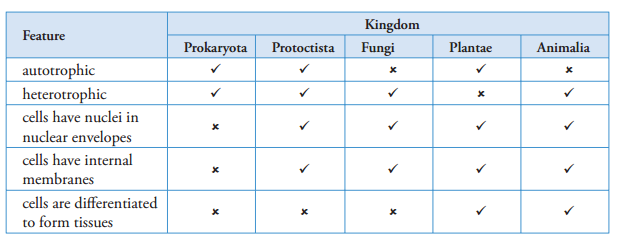
1 All living organisms may be classified into one of the five kingdoms: prokaryotes, protoctists, fungi, plants and animals.

2 Biodiversity includes the range of habitats (environments) and species in an area, and the genetic diversity within a species.


3 There are moral and ethical reasons for maintaining biodiversity, and also more practical ones. For example, we may be able to use plants to provide medicines, and animals to provide alleles to use in animal breeding.

4 Species may become in danger of extinction through habitat loss, change to their environment (perhaps as a result of pollution) and overexploitation by humans.

5 Conservation of an endangered animal species may involve captive breeding programmes, in which viable populations are built up in zoos and wildlife parks. These programmes try to ensure that the gene pool is maintained and inbreeding is avoided. At the same time, attempts are made to provide a suitable habitat in the wild, so that captive-bred animals can eventually be re-released into the wild. Local people are involved, because this increases acceptance of the project and the chances of its success.

6 Botanic gardens and seed banks help to conserve threatened plant species by breeding them for reintroduction into an appropriate habitat. Seed banks provide suitable conditions to keep different types of seeds alive for as long as possible. Samples of the seeds are grown into adult plants every now and then, so that fresh seed can be collected.

7 Many countries have protected areas called national parks, which often cover large areas. These are set up to conserve rare and endangered species and to maintain their habitats. Often legislation is passed to ensure their protection. In such areas, agriculture is controlled and building, mining and other industries strictly regulated. Access is often limited but not forbidden, as one aim of most such parks is to educate people about the importance of conservation. 8 Other, smaller, conservation areas may be created to protect particular species and habitats.

1. End-of-chapter questions

 Which organism is a fungus?


2   Which   of the  statements    about   Protoctista    are correct?
   1   a eukaryote   that  is not  a fungus,   plant   or animal   is a protoctist
   2    an organism   with  cellulose  cell walls  and  chloroplasts    may  be a protoctist
   3    an organism   existing  as a group   of similar  cells may  be a protoctist
   4    a single-celled   heterotrophic     eukaryote   is a protoctist

 A   1,2,3 and  4          B   1, 2 and 4 only  C   2 and 3 only           D 3 and 4 only


3   A gene  bank  is a store  of the  genetic  variation   of a species.  Which   of the  following   are gene  banks?
1   captive  animals   in a zoo                                                                     
2    plants  in a botanic   garden
3    seeds in a seed bank
4    plant  cells growing   in tissue  culture
5   frozen  sperm,   eggs or embryos

A  1, 2, 3, 4 and 5   B   1, 2 and 3 only      C  2, 3 and  4 only   D   3, 4 and  5 only


4   Copy  and  complete   the  table  to show  the  features   present   in the  five different   classificatory   Kingdoms    of living organisms.   Use a tick  (V")   to show  the  presence   of a feature  and  a cross  (x)  to show  its absence.
Add caption
5   Distinguish   between   orthodox    and  recalcitrant     seeds.
6   a    Explain  what  is meant   by biodiversity. [2]
     b    Over  half  of the  living  species  of plants   and  animals   live in  tropical   rainforests.    Suggest  why  this  is so. [4]
    c    Some  rainforest   species,  for  example   the  squirrel   monkey   in Costa  Rica,  are endangered.    Suggest  four  ways to  conserve  an animal   species  such  as the  squirrel   monkey.[4]
   d    List four  practical   reasons  why  humans   should   try  to maintain    biodiversity. [4]
[Total:   14]

7 a In  many   cases,  the  reason   for  an  organism    becoming    endangered    is the  loss of its habitat   as a result  of human activity.   List  four ways  in which   human    activity   causes  habitat   loss. [4]
       b In  1973,  the  population  of African   elephants  in  Kenya was about 167000 animals,  but  by 1989 the population had  dropped to about 16000  animals. In  2010 the  population had  risen  to  about  36000  animals. Suggest explanations for  these  changes. [6]
c Explain: 
             i  how  captive   breeding   of animals,   such  as the  scimitar-horned    oryx,  can  help  conserve   an endangered    species; [3]
            ii  how genetic diversity can be maintained  during a captive breeding programme.     [3] 
[Total:  16]


8  The  American  crocodile,  Crocodylus acutus, was classified  as an endangered  species  by the  USA  in  1975.  It is found in  estuarine  regions  of southern  Florida.

The  salinity   of the  water  was  thought    to  playa   part  in  the  distribution     of the  American    crocodile.   The  figure  shows the  number    of American    crocodile   nest  sites  in  areas  with  water  of varying   salinity   in southern    Florida.

a    Describe   the  results  shown   in  the  figure.               [3]

b    Much   conservation   work  has  been  done  in  the  Everglades   National    Park  in  Florida,   which   is a large wetland area.  As a result,   the  number    of nest  sites  increased   from  eight  in  1975  to 31  in 2000.   This  led  to a rise in the number    of crocodiles.  

  i  Calculate    the  percentage    increase   in  nest  sites  between    1975  and  2000.   Show  your  working.[2]
  ii    Suggest   two  reasons  why  the  population     of crocodiles   in  the  Everglades   National    Park  has  increased.[2]
[Total:  7]

[Cambridge International  AS and A Level Biology 9700/42,   Question 1, Mayljune2010,]                                                                                                          


2. End-of-chapter answers
 1 D
 2 A
 3 A
 4
5 orthodox seeds: can be dehydrated and frozen for long-term storage;

   recalcitrant seeds: cannot be dehydrated and frozen;


Exam-style questions


6 a biodiversity:
      range/variety, of, species/communities/ecosystems;
      the genetic variation within a species;
      the genetic variation between species; [max. 2]

  b high rate of photosynthesis/rapid growth of plants; allows large number of plant species;
     available throughout the year;
      provides niches for large number of animal species; [4]

 c maintain as a captive population in a zoo/captive breeding;
    set up conservation area/protect habitat from clearance;
    ban, hunting/capture;
   educate public/introduce ecotourism; [4]

d as resource for, food/materials;
    as source of alleles for breeding to improve agricultural species;
    as potential medicines; for ecotourism/leisure;
    to maintain, food webs/nutrient cycles; [max. 4]
 [Total: 14]

7 a clearing land for agriculture;
      clearing land for housing;
      clearing land for industrial building;
      clearing land for, road building/railways/pipelines/
     other infrastructure;
     mining;
     logging;
     pollution/global warming; [max. 4]

 b fall from 167 000 to 16 000 due to a combination of factors including:
    ivory hunting;
    game hunting;
    hunting for meat;

    killing after damage to village crops;
   habitat loss;
    rise after 1989 due to ban on ivory trading;
    rise only to 36 000 because other factors still apply: habitat loss;
   poaching;
   killing after damage to village crops; [max. 6]

c i bred in several places so not all at risk from same disease;
     increased numbers of animals;
     allows return of animals to wild; [3]

  ii close relatives are not interbred; e.g. siblings/father with daughter;
    in-vitro fertilisation used to breed from distantanimals;
    refer to embryo donation and use of surrogates; [max. 3]
 [Total: 16]
8 a more nests in less saline areas;
     22 nests at 0–5 parts per thousand compared with 1 at 31–35 parts per thousand;
     anomalous result for 16–20 parts per thousand; [3]


       ii more fresh water/lower salinity;
          sites protected;
          ecotourism encouraged;
          ban on hunting;
          less pollution; [max. 2]
 [Total: 7]


International conservation and restoring degraded habitats

Non-governmental organisations, such as the World Wide Fund for Nature (WWF) and the Convention on International Trade in Endangered Species of Wild Fauna and Flora (CITES), play important roles in local and global conservation.

An important part of conservation is restoring degraded habitats so that they may support a flourishing community with high biodiversity.


NGOs in local and global conservation
CITES - Convention on International Trade in Endangered Species of Wild Fauna and Flora

  • a signed agreement to control trade of endangered species and their products
            e.g.: fur, skin, ivory,...
  • considers evidence presented to it about endangered species
           ---> assigns to 1 of 3 appendices with given criteria and trading regulations
  • sometimes CITES listings don't benefit the species:
          - species trade becomes illegal --> price for products increase --> more trade occurs


WWF - World Wide Fund for Nature - the #1 campaigning group for wildlife
  • "to stop degradation of the planet's natural environments
  • build future where humans and nature live in harmony."
- funds conservation projects
- publicises environmental issues and campaigns


Restoring degraded habitats 
so they may support a flourishing community with high biodiversity
- degradation: human activity or natural catastrophe
- restoration:
  • e.g.: small scale - farmer plants trees on land that is no longer needed for food production
  • e.g.: replanting mangrove forests
             - provides protection against storm damage, flooding, rising sea levels 
             - important nursery gounds for young fish
                  Planting trees in Haiti
             - after deforestation, soil erosion,.... 
                  Eden project, UK
             - reclamation project
             - educated people in plant biodiversity and the need for conservation


18.3 Conservation

Maintaining biodiversity is important for many reasons. Actions to maintain biodiversity must be taken at local, national and global levels. 

 It is important to conserve ecosystems as well as individual species.

a) discuss the threats to the biodiversity of aquatic and terrestrial ecosystems (see 18.1b) 

b) discuss the reasons for the need to maintain biodiversity 

c) discuss methods of protecting endangered species, including the roles of zoos, botanic gardens, conserved areas (national parks and marine parks), ‘frozen zoos’ and seed banks 

d) discuss methods of assisted reproduction, including IVF, embryo transfer and surrogacy, used in the conservation of endangered mammals 

e) discuss the use of culling and contraceptive methods to prevent overpopulation of protected and non-protected species 

f) use examples to explain the reasons for controlling alien species 

g) discuss the roles of non-governmental organisations, such as the World Wide Fund for Nature (WWF) and the Convention on International Trade in Endangered Species of Wild Fauna and Flora (CITES), in local and global conservation 

h) outline how degraded habitats may be restored with reference to local or regional examples

Friday, 1 July 2016

Controlling alien species

Alien or invasive species are those that have moved from one ecosystem to another where they were previously unknown.


Causes:

  • humans trading animals and plants
  • introduced as biological control agents to control pests
  • escapees
  • animals introduced for sport

Effects:
  • become successful predators
  • compete effectively with native organisms of the same niche, pushing them to extinction
  • introduce diseases --> spread to organisms that have been exposed to that pathogen


Examples:

Water hyacinth: 
  • grow successfully --> covers huge areas of land and water
         ---> blocks sunlight from reaching native aquatic plants
         ---> reduce concentration of oxygen in the water
         ---> kills fish
  • habitat for mosquito larvae


Japanese knotweed:

  • vigorous root systems --> forces its way through concrete and damaged buildings, roads, walls
  • outcompetes native species by reducing space where they grow


Cane toad:
  • introduced to Queensland, Australia from Hawaii in 1935
  • aim: control insect pest of cane sugar
  • the cane toad bred rapidly, spreading across the country
  • has few predators in Australia as the toad produces a toxing that kills animals that eat it

Red lionfish:
  • native to seas of South-East Asia
  • escapee from the Caribbean
  • becomes a predator in its new environment; eats local species of coral reefs


Indian mongoose:
  • introduced to Jamaica in 1872
  • aim: control rats in cane fields
  • the mongoose did so well it became a predator to other animal


18.3 Conservation

Maintaining biodiversity is important for many reasons. Actions to maintain biodiversity must be taken at local, national and global levels. 

 It is important to conserve ecosystems as well as individual species.

a) discuss the threats to the biodiversity of aquatic and terrestrial ecosystems (see 18.1b) 

b) discuss the reasons for the need to maintain biodiversity 

c) discuss methods of protecting endangered species, including the roles of zoos, botanic gardens, conserved areas (national parks and marine parks), ‘frozen zoos’ and seed banks 

d) discuss methods of assisted reproduction, including IVF, embryo transfer and surrogacy, used in the conservation of endangered mammals 

e) discuss the use of culling and contraceptive methods to prevent overpopulation of protected and non-protected species 

f) use examples to explain the reasons for controlling alien species 

g) discuss the roles of non-governmental organisations, such as the World Wide Fund for Nature (WWF) and the Convention on International Trade in Endangered Species of Wild Fauna and Flora (CITES), in local and global conservation 

h) outline how degraded habitats may be restored with reference to local or regional examples

Assisted reproduction and problems of successful conservation

Assisted reproduction is a solution to the problem of inbreeding.


Assisted reproduction

Sperm bank - freezing collected semen

Sperm samples are collected from males, checked for sperm activity and then diluted with a medium containing a buffer solution and albumen. Small volumes of semen are put into straws (thin tubes) and are stored in liquid nitrogen at -196 degrees Celcius.


Artificial insemination (IA)
- a straw is placed into warm water to activate sperm
- the straw is placed into a catheter --> inserted into the vagina, through the cervis, into the uterus
- resulting embryos are 'flushed out' of the uterus
- embryo transfer: embryo gets transferred to other females (surrogate mothers) that had had hormonal treatment to prepare for pregnancy

  • protects endangered animals from pregnancy
  • the endangered female becomes the source of many offspring

In-vitro fertilisation (IVF)
- oocyte collected by inserting needle into ovaries --> withdraw mature follicles
- oocyte cultured in a medium --> mixed with semen
- resulting zygotes divide --> form embryos --> cultured for several days
- embryo is placed into the mother or into several females of same or different species


Problems of successful conservation
- organism is saved from extinction has increased in numbers beyond the capacity of the ecosystem to sustain such numbers.
- culling: aim - to reduce numbers

  • transferring animals to places with small populations
  • birth control: chemical contraceptives: vaccine that targets the region surrounding layer of glycoprotein around egg (vaccine produces immune response --> produce antibodies against glycoproteins)
                   - antibodies attach to glycoprotein and block sperms from fertilising egg
                   - 90% success rate


18.3 Conservation

Maintaining biodiversity is important for many reasons. Actions to maintain biodiversity must be taken at local, national and global levels. 

 It is important to conserve ecosystems as well as individual species.

a) discuss the threats to the biodiversity of aquatic and terrestrial ecosystems (see 18.1b) 

b) discuss the reasons for the need to maintain biodiversity 

c) discuss methods of protecting endangered species, including the roles of zoos, botanic gardens, conserved areas (national parks and marine parks), ‘frozen zoos’ and seed banks 

d) discuss methods of assisted reproduction, including IVF, embryo transfer and surrogacy, used in the conservation of endangered mammals 

e) discuss the use of culling and contraceptive methods to prevent overpopulation of protected and non-protected species 

f) use examples to explain the reasons for controlling alien species 

g) discuss the roles of non-governmental organisations, such as the World Wide Fund for Nature (WWF) and the Convention on International Trade in Endangered Species of Wild Fauna and Flora (CITES), in local and global conservation 

h) outline how degraded habitats may be restored with reference to local or regional examples

Protecting endangered species

An endangered species is one that is threatened with extinction. The best way to conserve any species is to keep it in its natural habitat.


National parks - conservation areas with strict limits to protect wildlife and the environment

  • alien animal species are removed; invasive plants are dug up and destroyed
  • restriction on human activities; tourism raises money and awareness
  • marine parks: conserve fragile ecosystems and areas at risk of overfishing, dredging, pollution

Zoos - protection for endangered and vulnerable species; provides enjoyment and interest for visitors
  • captive breeding programmes: help reintroduce animals to their natural habitats
  • problems: 
            - inbreeding, when breeding animals from a small population
            - some captive bred animals don't know how to avoid predators, find food, rear young
            - animals refuse to breed in captivity; hard to recreate suitable habitat --> animal can't                   be returned to the wild
  • for research: understand breeding habits, habitats, how to increase genetic diversity, solution in inbreeding problems

Botanic gardens
  • seeds/cuttings are collected from species in the wild and are used to build up a population of plants that can one day be reintroduced into the wild
  • sample of cells grown on agar (in sterile conditions) 
          --> cells divide by mitosis to give a mass of cells which can be cloned 
          --> cells transferred to a medium contain an appropriate mixture of plant hormones 
          --> grow stems, roots 
          --> transferred to soil
Roles of botanic gardens:
  • protect endangered plant species
  • research methods of reproduction and growth
  • research conservation methods
  • reintroduce species to habitats
  • educate the public (roles of plants in the cosystem; economic value)

Frozen zoo

Holds genetic resoures for endangered species in the form of eggs, sperms and embryos
  • more genetic diversity
  • genetic material is kept for longer periods of time
*eggs are more difficult to freeze as they are more likely damaged by freezing and thawing


Seed banks

Seeds of the same species are collected from different sites, so that the stored samples contain a good proportion of the total gene pool of that species --> genetic diversity is not lost

"Recalcitrant" seeds cannot be dried and frozen. These include seeds of economically important tropical species e.g.: rubber, coffee, cocoa. The only ways to keep the genetic diversity of these species are to
  • collect seeds and grow successive generations of plants 
  • keep as tissue culture

* seeds can be stored for a long time with little maintenance, anywhere in the world
* seeds are germinated every few years to:
  • check if seeds are still viable
  • produce new plants to collect new seeds
  • find conditions for breaking seed dormancy


18.3 Conservation

Maintaining biodiversity is important for many reasons. Actions to maintain biodiversity must be taken at local, national and global levels. 

 It is important to conserve ecosystems as well as individual species.

a) discuss the threats to the biodiversity of aquatic and terrestrial ecosystems (see 18.1b) 

b) discuss the reasons for the need to maintain biodiversity 

c) discuss methods of protecting endangered species, including the roles of zoos, botanic gardens, conserved areas (national parks and marine parks), ‘frozen zoos’ and seed banks 

d) discuss methods of assisted reproduction, including IVF, embryo transfer and surrogacy, used in the conservation of endangered mammals 

e) discuss the use of culling and contraceptive methods to prevent overpopulation of protected and non-protected species 

f) use examples to explain the reasons for controlling alien species 

g) discuss the roles of non-governmental organisations, such as the World Wide Fund for Nature (WWF) and the Convention on International Trade in Endangered Species of Wild Fauna and Flora (CITES), in local and global conservation 

h) outline how degraded habitats may be restored with reference to local or regional examples

need to maintain biodiversity

For some people, the safety of biodiversity is simply a moral or ethical issue. For others it may be for ecological reasons, aesthetic reasons, social and commercial reasons or for other services.


Ecological reasons

  • the higher the diversity of an ecosystem, the less likely it is to be unbalanced by changes in conditions or threats such as pollution
  • ecosystems are of direct value to humans
                  e.g.: - antibiotics from fungi, bacteria
                          - anti-cancer drugs isolated from plants
Aesthetic reasons
  • people gain pleasure from studying or just appreciating the natural work (inspiration to artists, poets, photographers,...)
  • ecotourism: wildlife = source of income --> provides employment; contributes to economies

Social and commercial reasons
  • wild plants species that are resistant to large numbers of disease of rice known as bacterial blight --> interbreed with cultivated rice (crop plants don't hae much genetic diversity as their wild relatives, because it has been lost by selective breeding for uniform, high-yielding crops)
  • microorganisms = source of useful products
                  e.g.: Taq polymerase used for PCR in forensic and DNA analysis

Other services
  • forests absorb CO2 --> lowers the effect of high CO2 concentration in the atmosphere
  • organic waste added in water gets broken down by mircroorganisms
  • transpiration of plants: contribute to the water cycle - provides water for drinking and irrigation
  • termites, ants, fungi, bacteria recycle elements (C,H,O,N,...)


18.3 Conservation

Maintaining biodiversity is important for many reasons. Actions to maintain biodiversity must be taken at local, national and global levels. 

 It is important to conserve ecosystems as well as individual species.

a) discuss the threats to the biodiversity of aquatic and terrestrial ecosystems (see 18.1b) 

b) discuss the reasons for the need to maintain biodiversity 

c) discuss methods of protecting endangered species, including the roles of zoos, botanic gardens, conserved areas (national parks and marine parks), ‘frozen zoos’ and seed banks 

d) discuss methods of assisted reproduction, including IVF, embryo transfer and surrogacy, used in the conservation of endangered mammals 

e) discuss the use of culling and contraceptive methods to prevent overpopulation of protected and non-protected species 

f) use examples to explain the reasons for controlling alien species 

g) discuss the roles of non-governmental organisations, such as the World Wide Fund for Nature (WWF) and the Convention on International Trade in Endangered Species of Wild Fauna and Flora (CITES), in local and global conservation 

h) outline how degraded habitats may be restored with reference to local or regional examples

Threats to biodiversity

Biodiversity is under threat in many aquatic and terrestrial ecosystems as human population continues to increase and we take more resources from the environment and produce more waste.


Threats to biodiversity:

  • habitat loss and degradation of the environment
  • climate change
  • excessive use of fertilisers --> pollution
  • overexploitation and unsustainable use of resources
  • alien species invasion on native species

1. Habitat loss 
- destruction of natural environment: land clearing for agriculture, housing, transport,...
- e.g.: deforestation --> soil erosion --> sever land degradation
=> habitat fragmentation (habitats become divided)
  • most at risk of extinction: endemic species on small islands


2. Climate change
Air pollution: combustion of fuel with high sulfur content leads to high concentrations of atmospheric SO2
    SO2  in atmosphere + H2O = acid rain
  • destroys vegetation
  • acidification of aquatic ecosystems: animals can't breed/survive in waters of low pH
Industrialisation, extraction and combustion of fossil fuels
    increases concentration of CO2 and CH4 in the atmosphere = greenhouse gas --> climate change
    ---> global warming
  • change in distribution of terrestrial ecosystems: organisms will migrate north or south to cooler and higher latitudes. There will also be competition between migrating organisms
  • acidification of the oceans: destroy CaCO3 mollusc shells
  • rise in sea levels
  • increase in the frequency of natural catastrophies (hurrican, flooding,...)
                     e.g.: flooding: increases the concentration of nutrients in coastal waters -->                                        increases growth of phytoplanktons which provides food for starfish larvae -->                              adult starfish eats the coral
  • coral bleaching: corals provide protection for many coastlines. Corals are very sensitive to temperature increases --> die


3. Fertilisers and pollution
*pollutant: substances that animal bodies are unable to metabolise or excrete
  • factory wastes flow into rivers without any treatment --> substance persists --> enters food chains --> weakening of immune systems and reduction in fertility in birds and mammals
  • marine pollutant: non-biodegrable plastic
                 e.g.: - animals (dolphins) get caught in discarded fishing nets and die
                         - turtles eat plastic bags, mistaken then for jellyfish --> chokes

  • excess fertilisers (not absorbed by crop plants) drain into river --> extra nutrients cause growth of producers, such as algae:
                         -  produce toxic substances
                         - algae growth unbalances food web


18.3 Conservation

Maintaining biodiversity is important for many reasons. Actions to maintain biodiversity must be taken at local, national and global levels. 

 It is important to conserve ecosystems as well as individual species.

a) discuss the threats to the biodiversity of aquatic and terrestrial ecosystems (see 18.1b) 

b) discuss the reasons for the need to maintain biodiversity 

c) discuss methods of protecting endangered species, including the roles of zoos, botanic gardens, conserved areas (national parks and marine parks), ‘frozen zoos’ and seed banks 

d) discuss methods of assisted reproduction, including IVF, embryo transfer and surrogacy, used in the conservation of endangered mammals 

e) discuss the use of culling and contraceptive methods to prevent overpopulation of protected and non-protected species 

f) use examples to explain the reasons for controlling alien species 

g) discuss the roles of non-governmental organisations, such as the World Wide Fund for Nature (WWF) and the Convention on International Trade in Endangered Species of Wild Fauna and Flora (CITES), in local and global conservation 

h) outline how degraded habitats may be restored with reference to local or regional examples

Assessing species diversity

There are 2 types of sampling: random sampling and systematic sampling.


Random sampling

  • should be used when an area looks reasonably uniform
  • there is no clear pattern to the way the species are distributed

--> avoids bias

a) Quadrats
- a square frame that marks off area of ground or water
- used to identify the different species present and/or to measure abundance
- use results to calculate:

  • species frequency: measure of chance of a particular species being found within any one quadrat
  • species density: measure of how many individuals there are per unit area
- use results to estimate:
  • percentage cover: the percentage of area inside the quadrat that is occupied by each species
  • abundance scale (e.g.: Braun-Blanquet scale) for number and plant cover


b) Mark-release-recapture: estimating the population size of mobile organisms
  1. As many individuals caught as possible
  2. Individuals get marked (in a way that will not affect its future chances of survival)
  3. Marked individuals are counted (a)
  4. Marked individuals are returned to their habitats to mix randomly with their population
  5. After enough time has elapsed (at least 24 hours, maximum __ hours), a large sample is recaptured
      6. Number of marked (b) and unmarked individuals are counted
                            |_____________________|
                                                  |
                                                (c)


Systematic sampling

  • investigate species distribution where physical conditions change
  • e.g.: altitude, soil moisture content, soil pH, exposure/ light intensity
a) Line transect
  • record identity of organisms that touch the line at set distances
  • data shown as a drawing


b) Belt transect
  • place quadrats at regular intervals along line  --> record abundance of species within quadrat
  • data plotted as bar chart or kite diagram


Correlation - plot a scatter graph or calculate correlation coefficient (r)

*strength of correlation = how close the points are to the straight line

1. Pearson's correlation coefficient

use with 2 sets of data when data:

  • continuous data has been collected
  • must be normally distributed
  • may be a linear correlation (draw scatter diagram first)
  • quantitative data collected as measurements/counts
  • number of paired observations is at least 5, ideally 10 or more

2. Spearman's rank correlation
use when data:

  • data points are independent of each other
  • data is correlated, but not linear (draw scatter diagram first)
  • number of paired observations: at least 5, ideally between 10 and 30

- rank data for each variable and assess the difference between the rankings
- make a null hypothesis


Simpson's Index of Diversity

When you have  collected information about the abundance of he species in the are you are studying, use the results to calculate a value for species diversity in that area

  • n = total number of organisms in one species
  • N = total number of organisms of all species
  • D = Index of Diversity


18.1 Biodiversity

Biodiversity is much more than a list of all the species in a particular area.

a) define the terms species, ecosystem and niche 

b) explain that biodiversity is considered at three different levels: 
• variation in ecosystems or habitats 
• the number of species and their relative abundance 
• genetic variation within each species 

c) explain the importance of random sampling in determining the biodiversity of an area 

d) use suitable methods, such as frame quadrats, line transects, belt transects and mark-release-recapture, to assess the distribution and abundance of organisms in a local area 

e) use Spearman’s rank correlation and Pearson’s linear correlation to analyse the relationships between the distribution and abundance of species and abiotic or biotic factors 

f) use Simpson’s Index of Diversity (D) to calculate the biodiversity of a habitat and state the significance of different values of D 

Thursday, 30 June 2016

Biodiversity

Biodiversity is much more than a list of all the species in a particular area.


species: a group of organisms with
  • similar morphological, physiological, biochemical and behavioural features
  • can interbreed to produce fertile offspring
  • reproductively isolated from other species

ecosystem: a relatively self-contained, interacting community of organisms, and the environment in which they live in and with which they interact

niche: role of an organism in an ecosystem

habitat: where a species lives within an ecosystem


Biodiversity: degree of variation of life forms in an ecosystem:
  • variation in ecosystems or habitats
  • number of species and their relative abundance
  • genetic variation within each species

Species diversity
- species richness: number of species in a community
- species diversity: species richness and a measure of the eveness of abundance of different species
Ecosystems with high species diversity tend to be more stable --> more able to resist changes
- some ecosystems are dominated
- the tropics are important centres for diversity

Genetic diversity
genetic diversity: diversity of alleles within the genes in the genome of a single species; calculated 
  • what proportion of genes have different alleles
  • how many alleles there are per gene
There is genetic diversity:
  • between populations
  • within each population


18.1 Biodiversity

Biodiversity is much more than a list of all the species in a particular area.

a) define the terms species, ecosystem and niche 

b) explain that biodiversity is considered at three different levels: 
• variation in ecosystems or habitats 
• the number of species and their relative abundance 
• genetic variation within each species 

c) explain the importance of random sampling in determining the biodiversity of an area 

d) use suitable methods, such as frame quadrats, line transects, belt transects and mark-release-recapture, to assess the distribution and abundance of organisms in a local area 

e) use Spearman’s rank correlation and Pearson’s linear correlation to analyse the relationships between the distribution and abundance of species and abiotic or biotic factors 

f) use Simpson’s Index of Diversity (D) to calculate the biodiversity of a habitat and state the significance of different values of D