Showing posts with label A2. Show all posts

Tuesday, 5 July 2016

Herbicide and insect resistant crops

Genetic technology can provide benefits in, for example, agriculture and medicine, but has the associated risk of the escape of the gene concerned into organisms other than the intended host.


Herbicide resistant crops
Fields of crops are sprayed with herbicide to kill weeds that compete for space, light, water, and ions to increase crop yield.

Oil seed rape

  • a source of vegetable oil and biodiesel fuel
  • modified oil seed rape is resistant to the herbicide glyphosphate (inhibits the synthesis of 3 amino acids: phenylamine, tyrosine, trytophan)
             - glyphosphate is absorbed through leaves and is transported to growing tips
  • the gene transferred into crop plants come from a strain of the bacterium Agrobacterium


Tobacco
  • resistant to herbicides: sulfonylurea and dinitroaniline
  • genes taken from other plant species

Effects on the environment:
  • the GMed plants become agricultural weeds
  • pollen will transfer the gene to wild relatives, producing hybrid offspring that are invasive weeds
  • herbicide-resistant weeds will evolve because so much of the same herbicide is used

Insect-resistant crops
To protect crop plants against insect pests to increase crop yield

Cotton - protected against boll weevil

Bt maize - protected against corn borers
  • Bt toxing is - lethal to insects that eat it
                              - harmless to other animals
  • gene for Bt toxin is taken from the bacterium Agrobacterium tumefaciens
  • genetically modified crop plants with Bt toxin gene produce their own insectisides
  • Bt resistance in corn borers: recessive allele. Adult corn borers in refugees (non GM maize) supply the dominant allele to counteract the resistance when they mate with borers from the fields

Effect on environment:
  • evolution of resistance by insect pests
  • damaging effects on other insect species
  • transfer of added gene to other plant species


19.3 Genetically modified organisms in agriculture 

The ability to manipulate genes has many potential benefits in agriculture, but the implications of releasing genetically modified organisms (GMOs) into the environment are subject to much public debate in some countries.

a) explain the significance of genetic engineering in improving the quality and yield of crop plants and livestock in solving the demand for food in the world, e.g. Bt maize, vitamin A enhanced rice (Golden riceTM) and GM salmon 

b) outline the way in which the production of crops such as maize, cotton, tobacco and oil seed rape may be increased by using varieties that are genetically modified for herbicide resistance and insect resistance 

c) discuss the ethical and social implications of using genetically modified organisms (GMOs) in food production

Monday, 4 July 2016

Genetically modified organisms

Genetic engineering is improving the quality (nutrition) and yield of crop plants and livestock  --> therefore is solving the demand for food in the world


1. Golden Rice
- genetically modified rice produces large quantities of β-carotene in endosperm --> human cells convert β-carotene to Vitamin A
- Golden Rice has same yield, pest resistance and eating qualities as the original varieties
- normally:

  • deficiency of Vitamin A can lead to blindness and death (due to a weak immune system)
  • Vitamin-A is fat soluble: found in oily-fish, dairy, liver,...
  • Pro-vitamin A is present in the aleurone layer, not in the endosperm in rice

-genes for carotene production is taken from:   and inserted into rice
  • daffodils
  • common soil bacterium Pantoea ananatis

*ethical implications?
Some organisations condemn Golden Rice: It is the wrong way to solve poverty. Solving political, cultural and economic issues will help lower poverty, as people will be given a more varied diet


From question 9a past paper of Winter 2014, paper 43


http://papers.gceguide.com/A%20Levels/Biology%20(9700)/9700_w14_qp_43.pdf
http://papers.gceguide.com/A%20Levels/Biology%20(9700)/9700_w14_ms_43.pdf

2. GM Atlantic salmon
Injected into a fertilised egg of an Atlantic salmon:

  • growth-hormone regulating gene from a PAcific Chinook salmon
  • promoter from another species of fish, an ocean pout
The salmons are able to grow all year, instead of just in sping and summer. They reach market size in 18 months as opposed to 3 years of an unmodified fish.


19.3 Genetically modified organisms in agriculture 

The ability to manipulate genes has many potential benefits in agriculture, but the implications of releasing genetically modified organisms (GMOs) into the environment are subject to much public debate in some countries.

a) explain the significance of genetic engineering in improving the quality and yield of crop plants and livestock in solving the demand for food in the world, e.g. Bt maize, vitamin A enhanced rice (Golden riceTM) and GM salmon 

b) outline the way in which the production of crops such as maize, cotton, tobacco and oil seed rape may be increased by using varieties that are genetically modified for herbicide resistance and insect resistance 

c) discuss the ethical and social implications of using genetically modified organisms (GMOs) in food production

Gene therapy

Gene therapy: treatment of a genetic disorder by altering a person's genotype (insert functional alleles of genes into cells)


Common vectors:

  • virus: retrovirus, lentivirus, HIV, adeno-associated virus (AAV)
  • liposomes - small spheres of phospholipids
  • naked DNA

- retrovirus: inserts genes randomly into host's genome. If the gene is inserted into another gene or regulatory sequence of a gene, it could activate a nearby gene and cause cancer


- lentivirus: inserts genes randomly into host's genome, but this virus can be modified to inactivate replication e.g.: HIV

- adeno-associated virus (AAV): does not insert genes into host genome --> gene is not passed to daughter cells when a cell divides --> the virus can be used successfully with long-lived cells


Severe combined immunodeficiency (SCID) 
  • a crippled immune system
  • sufferers may die at infancy due to normal infections
  • inability to make adenosine deaminase (ADA)
--> T-lymphocytes of sufferers are removed and normal alleles of the ADA gene are introduced into them using a virus vector. This is not a permanent cure.

They call him bubble boy.

Cystic fibrosis: genetic disorder where abnormally thick mucus is produced in the lungs and other body parts. It is caused by a recessive mutated allele of the gene for a functional transporter protein for chloride ions.

  • deletion mutation of 3 bases (AAA) in CFTR gene
  • role of CFTR: transport chloride ions across epithelial cell membranes of the pancreasm alveoli in the lungs,...  ---> water follows via osmosis across membranes as water potential decreased due to the entry of chloride ions ---> membranes remain moist and runny
  • sufferers of cystic fibrosis: CFTR non-functional --> water is retained inside cell --> results in dry membranes and sticky mucus

Symptoms:
  • thick mucus accumulates in lungs --> breathing difficulties and higher risks of infections
  • thick mucus blocks pancreatic duct and therefore blocks off oral enzyems that help digestion
  • male infertility: thick mucus blocks sperm ducts
Somatic and germ cell therapy
- somatic cells = body cells
- germ cells = cells involved in sexual reproduction (alleles in the germ line are passed on through generations and generations)

Applications
  • electrophoresis of DNA is used in genetic profiling (fingerprinting) in forensic science
  • PCR is also used in forensic science to solve crimes: used to amplify DNA from small tissue samples


19.2 Genetic technology applied to medicine

a) define the term bioinformatics 

b) outline the role of bioinformatics following the sequencing of genomes, such as those of humans and parasites, e.g. Plasmodium (details of methods of DNA sequencing are not required) 

c) explain the advantages of producing human proteins by recombinant DNA techniques (reference should be made to some suitable examples, such as insulin, factor VIII for the treatment of haemophilia and adenosine deaminase for treating severe combined immunodeficiency (SCID)) 

d) outline the advantages of screening for genetic conditions (reference may be made to tests for specific genes such as those for breast cancer, BRCA1 and BRCA2, and genes for haemophilia, sickle cell anaemia, Huntington’s disease and cystic fibrosis) 

e) outline how genetic diseases can be treated with gene therapy and discuss the challenges in choosing appropriate vectors, such as viruses, liposomes and naked DNA (reference may be made to SCID, inherited eye diseases and cystic fibrosis) 

f) discuss the social and ethical considerations of using gene testing and gene therapy in medicine (reference should be made to genetic conditions for which treatments exist and where none exist, also to IVF, embryo biopsy and preselection and to therapeutic abortions) 

g) outline the use of PCR and DNA testing in forensic medicine and criminal investigations

Genetic screening

Genetic screening: analysis of a person's DNA to check for the presence of a particular allele
* available for adults, fetus, embryo,...


- BRCA1 and BRCA2: faulty alleles that lead to breast and ovarian cancer in females and breast cancer in males ---> elective vasectomy


- pre-implantation genetic diagnosis (PGD):

  • carry out the IVF procedure (sperm and egg in a dish)
  • when it reaches the 8-cell stage, remove one cell and analyse the DNA for disease alleles
              - disease allele absent: embryo chosen for implantation
              - disease allele present: embryo is discarded
---> avoid pregnancies with haemophilia, sickle cell anaemia, Huntington's disease, cystic fibrosis,...


  • provides information about the increased risks of people having genetic conditions
  • people prepare for the late onset of genetic conditions like Huntington's disease
  • identify whether embryos from IVF will develop genetic conditions
  • identify a fetus that needs early treatment
  • helps provide early diagnosis

Ethics of genetic screening
  • fetus screening for genetic disease:
             - amniocentesis: look for chromosomal mutations
             - chorionic villus sampling (although there is an increased risk for miscarriage with this)
  • sex preselection: terminates pregnancy if the embryo is of the wrong sex (used PGD to select)
  • therapeutic abortions: terminating pregnancies for medical reasons


19.2 Genetic technology applied to medicine

a) define the term bioinformatics 

b) outline the role of bioinformatics following the sequencing of genomes, such as those of humans and parasites, e.g. Plasmodium (details of methods of DNA sequencing are not required) 

c) explain the advantages of producing human proteins by recombinant DNA techniques (reference should be made to some suitable examples, such as insulin, factor VIII for the treatment of haemophilia and adenosine deaminase for treating severe combined immunodeficiency (SCID)) 

d) outline the advantages of screening for genetic conditions (reference may be made to tests for specific genes such as those for breast cancer, BRCA1 and BRCA2, and genes for haemophilia, sickle cell anaemia, Huntington’s disease and cystic fibrosis) 

e) outline how genetic diseases can be treated with gene therapy and discuss the challenges in choosing appropriate vectors, such as viruses, liposomes and naked DNA (reference may be made to SCID, inherited eye diseases and cystic fibrosis) 

f) discuss the social and ethical considerations of using gene testing and gene therapy in medicine (reference should be made to genetic conditions for which treatments exist and where none exist, also to IVF, embryo biopsy and preselection and to therapeutic abortions) 

g) outline the use of PCR and DNA testing in forensic medicine and criminal investigations

Sunday, 3 July 2016

Bioinformatics

Bioinformatics is the collecting, processing and analysis of biological information and data using computer software.


Bioinformatics build databases which hold gene sequences and sequences of complete genomes. These sequences can be matched --> calculate degrees of similarity (close similarities indicate recent common ancestry)

  • human genes may be found in other organisms and are used to model for investigating the way in which such genes have their effects
  • e.g.: Plasmodium genome: used to find new methods to control parasites
            ---> reading the gene sequences provides information to develope vaccines for malaria


Advantages of using human proteins produced from recombinant DNA
1. Insulin 

  • reliable supply available for increasing demand
  • is not dependent on factors e.g.: meat trade
  • acts faster than animal insulin or slower over a long period of time
2. Factor VIII - genetically modified hamster cells produce factor VIII
  • Factor VIII is extracted and purified before being used to treat patients with haemophilia
  • avoids the risk of infection e.g.: HIV from donated blood
3. adenosine deaminase (ADA) - used to treat SCID (severe combined immunodeficiency disease)
- produced from genetically modified larvae of cabbage looper moth caterpillar
- administered to patients when:
  • waiting for gene therapy
  • gene therapy is not possible


19.2 Genetic technology applied to medicine

a) define the term bioinformatics 

b) outline the role of bioinformatics following the sequencing of genomes, such as those of humans and parasites, e.g. Plasmodium (details of methods of DNA sequencing are not required) 

c) explain the advantages of producing human proteins by recombinant DNA techniques (reference should be made to some suitable examples, such as insulin, factor VIII for the treatment of haemophilia and adenosine deaminase for treating severe combined immunodeficiency (SCID)) 

d) outline the advantages of screening for genetic conditions (reference may be made to tests for specific genes such as those for breast cancer, BRCA1 and BRCA2, and genes for haemophilia, sickle cell anaemia, Huntington’s disease and cystic fibrosis) 

e) outline how genetic diseases can be treated with gene therapy and discuss the challenges in choosing appropriate vectors, such as viruses, liposomes and naked DNA (reference may be made to SCID, inherited eye diseases and cystic fibrosis) 

f) discuss the social and ethical considerations of using gene testing and gene therapy in medicine (reference should be made to genetic conditions for which treatments exist and where none exist, also to IVF, embryo biopsy and preselection and to therapeutic abortions) 

g) outline the use of PCR and DNA testing in forensic medicine and criminal investigations

Genetic markers and microarrays

Genetic markers uses enzymes that produces fluorescent substances. There used to be antibiotic resistance gene markers, but there was the chance that they would spread the antibiotic resistance to other new strains of bacteria.


Genetic markers

Green fluorescent protein (GFP) from jellyfish:
  • gene inserted into plasmid --> taken up by bacteria
  • shine UV light --> identify genetically modified bacteria

β-glucuronidase (GUS) from E.coli:
  • transform into incubated with colourless/non-fluorescent substrate 
        ---> transform into coloured/fluorescent products 
        ---> detect activity of inserted genes


Microarray
  • identify genes present in an organism's genome
  • find out which genes are expressed within cells
       ---> microarrays contain thousands of gene probes

1. Genome analysis: compare genes present in two different species
  • DNA collected from each species, cut to fragments and denatured, labelled with fluorescent tags
  • DNA samples are mixed together and hybridised with DNA probes on the microarray --> inspected with UV light, causing the tags to fluoresce 
                 - colour: DNA has hybridised with probe
                 - no colour: DNA not hybridised, gene not present

2. Gene expression - detecting mRNA
- to identify genes that are being transcribed to mRNA
  • mRNA collected --> reverse transcriptase --> cDNA
  • cDNA labelled with fluorescent tags, denatured, hybridised with probes on microarray
  • spots that fluoresce microarrays show transcribed genes
* intensity of light emitted from spots = level of activity of genes


19.1 Principles of genetic technology 

Genetic engineering involves the manipulation of naturally occurring processes and enzymes. 

Genome sequencing gives information about the location of genes and provides evidence for the evolutionary links between organisms.

a) define the term recombinant DNA 

b) explain that genetic engineering involves the extraction of genes from one organism, or the synthesis of genes, in order to place them in another organism (of the same or another species) such that the receiving organism expresses the gene product 

c) describe the principles of the polymerase chain reaction (PCR) to clone and amplify DNA (the role of Taq polymerase should be emphasised) 

d) describe and explain how gel electrophoresis is used to analyse proteins and nucleic acids, and to distinguish between the alleles of a gene (limited to the separation of polypeptides and the separation of DNA fragments cut with restriction endonucleases) 

e) describe the properties of plasmids that allow them to be used in gene cloning 

f) explain why promoters and other control sequences may have to be transferred as well as the desired gene 

g) explain the use of genes for fluorescent or easily stained substances as markers in gene technology 

h) explain the roles of restriction endonucleases, reverse transcriptase and ligases in genetic engineering 

i) explain, in outline, how microarrays are used in the analysis of genomes and in detecting mRNA in studies of gene expression

Saturday, 2 July 2016

PCR and gel electrophoresis

The polymerase chain reaction (PCR) and gel electrophoresis both work with molecules. Both these procedures are needed for forensic science.


Polymerase chain reaction (PCR) - rapid production of a large number of copies of a particular DNA fragment

  1. DNA is denatured at 95 degrees Celcius --> separate DNA strands to expose bases
  2. attach primers to ends of single-stranded DNA at 65 degrees Celcius
  3. elongation: DNA polymerase builds new strands of DNA against exposed ones at 72 degrees Celcius
        * Taq polymerase - 1st heat-stable polymerase used in PCR
             - not destroyed in denaturation: no need to be replaced after each cycle
             - high optimum temperature to maximize efficiency 
                  --> temperature doesn't need to be dropped for annealing process


Gel electrophoresis - to separate different molecules; analysis of proteins and DNA)
- place mixture of molecules into wells cut in agarose gel --> apply electric field
- factors affecting movement speed of molecules:
  • net charge of molecules
  • size of molecule
  • composition of gel: size of 'pores ' within gel
Electrophoresis of proteins 
- separates polypeptides produced by different alleles of many genes
  • charge on protein is dependent on the ionisation of the R groups on the amino acid residues
  • charge depends on pH --> use buffer solution to keep constant pH
  • proteins are usually negatively charged
  • polypeptides separate due to different net charges


Electrophoresis of DNA
  • a region of DNA is chosen
  • DNA is extracted
  • DNA is chopped into pieces using restriction endonucleases
  • fragments are transferred to absorbent paper --> placed onto gel --> heated to separate DNA strands
  • "probes" (short sequences of single-stranded DNA) are added. They contain radioactive P isotopes --> X-ray results --> darken film, the separated fragments become visible

  •  


19.1 Principles of genetic technology 

Genetic engineering involves the manipulation of naturally occurring processes and enzymes. 

Genome sequencing gives information about the location of genes and provides evidence for the evolutionary links between organisms.

a) define the term recombinant DNA 

b) explain that genetic engineering involves the extraction of genes from one organism, or the synthesis of genes, in order to place them in another organism (of the same or another species) such that the receiving organism expresses the gene product 

c) describe the principles of the polymerase chain reaction (PCR) to clone and amplify DNA (the role of Taq polymerase should be emphasised) 

d) describe and explain how gel electrophoresis is used to analyse proteins and nucleic acids, and to distinguish between the alleles of a gene (limited to the separation of polypeptides and the separation of DNA fragments cut with restriction endonucleases) 

e) describe the properties of plasmids that allow them to be used in gene cloning 

f) explain why promoters and other control sequences may have to be transferred as well as the desired gene 

g) explain the use of genes for fluorescent or easily stained substances as markers in gene technology 

h) explain the roles of restriction endonucleases, reverse transcriptase and ligases in genetic engineering 

i) explain, in outline, how microarrays are used in the analysis of genomes and in detecting mRNA in studies of gene expression


Genetic engineering basics

Genetic engineering involves the manipulation of naturally occurring processes and enzymes.


Recombinant DNA (rDNA): DNA made by joining pieces from two or more different sources


Genetic engineering:

  • extraction/syntheses a gene(s) from one organism
  • transfer gene(s) into another organism (of same or different species)
  • --> gene is expressed in new host

Plasmids as vectors in gene cloning
Plasmids are small, circular pieces of double-stranded DNA

  • small --> easy to use
  • exist naturally in bacteria --> bacteria take up plasmids from surroundings
  • can be produced artificially 
  • double stranded: can insert genes from prokaryotes and eukaryotes
  • replicate independently in bacteria
  • can be transferred between different bacterial species

Promoters - control expression of genes --> ensure high levels of gene expression

Promoter binds to DNA strand
  • allows RNA polymerase to bind to DNA
  • ensures RNA polymerase recognizes which is the template strand
---> promoter region = transcription startpoint

Enzymes:
Restriction endonuclease: restrict viral infections by recognising and breaking down DNA of invading viruses.
---> binds to specific target site on DNA (sequence of bases) --> cut sugar-phosphate backbone:
  • straight across = blunt ends
  • staggered fashion = sticky ends*
* sticky ends: short lengths of unpaired bases; easily form hydrogen bonds with complementary base sequences on other fragments of DNA cut with the same restriction enzyme

Reverse transcriptase: 
  • uses single-stranded mRNA as the template
  • reverses the transcription process: produces single stranded DNA
  • single-stranded DNA + DNA polymerase = double-straned complementary DNA (cDNA)
DNA ligase: links together sugar-phosphate backbones of DNA molecules and plasmid ---> produces a closed circle of double-stranded DNA containing the new gene = "recombinant DNA"


19.1 Principles of genetic technology 

Genetic engineering involves the manipulation of naturally occurring processes and enzymes. 

Genome sequencing gives information about the location of genes and provides evidence for the evolutionary links between organisms.

a) define the term recombinant DNA 

b) explain that genetic engineering involves the extraction of genes from one organism, or the synthesis of genes, in order to place them in another organism (of the same or another species) such that the receiving organism expresses the gene product 

c) describe the principles of the polymerase chain reaction (PCR) to clone and amplify DNA (the role of Taq polymerase should be emphasised) 

d) describe and explain how gel electrophoresis is used to analyse proteins and nucleic acids, and to distinguish between the alleles of a gene (limited to the separation of polypeptides and the separation of DNA fragments cut with restriction endonucleases) 

e) describe the properties of plasmids that allow them to be used in gene cloning 

f) explain why promoters and other control sequences may have to be transferred as well as the desired gene 

g) explain the use of genes for fluorescent or easily stained substances as markers in gene technology 

h) explain the roles of restriction endonucleases, reverse transcriptase and ligases in genetic engineering 

i) explain, in outline, how microarrays are used in the analysis of genomes and in detecting mRNA in studies of gene expression


Genetic technology

19.1 Principles of genetic technology
19.2 Genetic technology applied to medicine
19.3 Genetically modified organisms in agriculture


The discovery of the structure of DNA by Watson and Crick in the early 1950s and discoveries since have led to many applications of gene technology in areas of medicine, agriculture and forensic science. This section relies heavily on prior knowledge of DNA structure and protein synthesis studied in the section on Nucleic acids and protein synthesis. Where possible, candidates should carry out practical work using electrophoresis, either with DNA or specially prepared dyes used to represent DNA or proteins. 

Candidates will be expected to use the knowledge gained in this section to solve problems in familiar and unfamiliar contexts.

Learning outcomes 

Candidates should be able to:

19.1 Principles of genetic technology 

Genetic engineering involves the manipulation of naturally occurring processes and enzymes. 

Genome sequencing gives information about the location of genes and provides evidence for the evolutionary links between organisms.

a) define the term recombinant DNA 

b) explain that genetic engineering involves the extraction of genes from one organism, or the synthesis of genes, in order to place them in another organism (of the same or another species) such that the receiving organism expresses the gene product 

c) describe the principles of the polymerase chain reaction (PCR) to clone and amplify DNA (the role of Taq polymerase should be emphasised) 

d) describe and explain how gel electrophoresis is used to analyse proteins and nucleic acids, and to distinguish between the alleles of a gene (limited to the separation of polypeptides and the separation of DNA fragments cut with restriction endonucleases) 

e) describe the properties of plasmids that allow them to be used in gene cloning 

f) explain why promoters and other control sequences may have to be transferred as well as the desired gene 

g) explain the use of genes for fluorescent or easily stained substances as markers in gene technology 

h) explain the roles of restriction endonucleases, reverse transcriptase and ligases in genetic engineering 

i) explain, in outline, how microarrays are used in the analysis of genomes and in detecting mRNA in studies of gene expression

19.2 Genetic technology applied to medicine

a) define the term bioinformatics 

b) outline the role of bioinformatics following the sequencing of genomes, such as those of humans and parasites, e.g. Plasmodium (details of methods of DNA sequencing are not required) 

c) explain the advantages of producing human proteins by recombinant DNA techniques (reference should be made to some suitable examples, such as insulin, factor VIII for the treatment of haemophilia and adenosine deaminase for treating severe combined immunodeficiency (SCID)) 

d) outline the advantages of screening for genetic conditions (reference may be made to tests for specific genes such as those for breast cancer, BRCA1 and BRCA2, and genes for haemophilia, sickle cell anaemia, Huntington’s disease and cystic fibrosis) 

e) outline how genetic diseases can be treated with gene therapy and discuss the challenges in choosing appropriate vectors, such as viruses, liposomes and naked DNA (reference may be made to SCID, inherited eye diseases and cystic fibrosis) 

f) discuss the social and ethical considerations of using gene testing and gene therapy in medicine (reference should be made to genetic conditions for which treatments exist and where none exist, also to IVF, embryo biopsy and preselection and to therapeutic abortions) 

g) outline the use of PCR and DNA testing in forensic medicine and criminal investigations

19.3 Genetically modified organisms in agriculture 

The ability to manipulate genes has many potential benefits in agriculture, but the implications of releasing genetically modified organisms (GMOs) into the environment are subject to much public debate in some countries.

a) explain the significance of genetic engineering in improving the quality and yield of crop plants and livestock in solving the demand for food in the world, e.g. Bt maize, vitamin A enhanced rice (Golden riceTM) and GM salmon 

b) outline the way in which the production of crops such as maize, cotton, tobacco and oil seed rape may be increased by using varieties that are genetically modified for herbicide resistance and insect resistance 

c) discuss the ethical and social implications of using genetically modified organisms (GMOs) in food production

Biodiversity and conservation

1 All living organisms may be classified into one of the five kingdoms: prokaryotes, protoctists, fungi, plants and animals.

2 Biodiversity includes the range of habitats (environments) and species in an area, and the genetic diversity within a species.


3 There are moral and ethical reasons for maintaining biodiversity, and also more practical ones. For example, we may be able to use plants to provide medicines, and animals to provide alleles to use in animal breeding.

4 Species may become in danger of extinction through habitat loss, change to their environment (perhaps as a result of pollution) and overexploitation by humans.

5 Conservation of an endangered animal species may involve captive breeding programmes, in which viable populations are built up in zoos and wildlife parks. These programmes try to ensure that the gene pool is maintained and inbreeding is avoided. At the same time, attempts are made to provide a suitable habitat in the wild, so that captive-bred animals can eventually be re-released into the wild. Local people are involved, because this increases acceptance of the project and the chances of its success.

6 Botanic gardens and seed banks help to conserve threatened plant species by breeding them for reintroduction into an appropriate habitat. Seed banks provide suitable conditions to keep different types of seeds alive for as long as possible. Samples of the seeds are grown into adult plants every now and then, so that fresh seed can be collected.

7 Many countries have protected areas called national parks, which often cover large areas. These are set up to conserve rare and endangered species and to maintain their habitats. Often legislation is passed to ensure their protection. In such areas, agriculture is controlled and building, mining and other industries strictly regulated. Access is often limited but not forbidden, as one aim of most such parks is to educate people about the importance of conservation. 8 Other, smaller, conservation areas may be created to protect particular species and habitats.

1. End-of-chapter questions

 Which organism is a fungus?


2   Which   of the  statements    about   Protoctista    are correct?
   1   a eukaryote   that  is not  a fungus,   plant   or animal   is a protoctist
   2    an organism   with  cellulose  cell walls  and  chloroplasts    may  be a protoctist
   3    an organism   existing  as a group   of similar  cells may  be a protoctist
   4    a single-celled   heterotrophic     eukaryote   is a protoctist

 A   1,2,3 and  4          B   1, 2 and 4 only  C   2 and 3 only           D 3 and 4 only


3   A gene  bank  is a store  of the  genetic  variation   of a species.  Which   of the  following   are gene  banks?
1   captive  animals   in a zoo                                                                     
2    plants  in a botanic   garden
3    seeds in a seed bank
4    plant  cells growing   in tissue  culture
5   frozen  sperm,   eggs or embryos

A  1, 2, 3, 4 and 5   B   1, 2 and 3 only      C  2, 3 and  4 only   D   3, 4 and  5 only


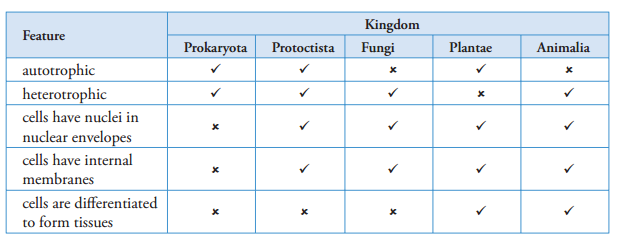
4   Copy  and  complete   the  table  to show  the  features   present   in the  five different   classificatory   Kingdoms    of living organisms.   Use a tick  (V")   to show  the  presence   of a feature  and  a cross  (x)  to show  its absence.
Add caption
5   Distinguish   between   orthodox    and  recalcitrant     seeds.
6   a    Explain  what  is meant   by biodiversity. [2]
     b    Over  half  of the  living  species  of plants   and  animals   live in  tropical   rainforests.    Suggest  why  this  is so. [4]
    c    Some  rainforest   species,  for  example   the  squirrel   monkey   in Costa  Rica,  are endangered.    Suggest  four  ways to  conserve  an animal   species  such  as the  squirrel   monkey.[4]
   d    List four  practical   reasons  why  humans   should   try  to maintain    biodiversity. [4]
[Total:   14]

7 a In  many   cases,  the  reason   for  an  organism    becoming    endangered    is the  loss of its habitat   as a result  of human activity.   List  four ways  in which   human    activity   causes  habitat   loss. [4]
       b In  1973,  the  population  of African   elephants  in  Kenya was about 167000 animals,  but  by 1989 the population had  dropped to about 16000  animals. In  2010 the  population had  risen  to  about  36000  animals. Suggest explanations for  these  changes. [6]
c Explain: 
             i  how  captive   breeding   of animals,   such  as the  scimitar-horned    oryx,  can  help  conserve   an endangered    species; [3]
            ii  how genetic diversity can be maintained  during a captive breeding programme.     [3] 
[Total:  16]


8  The  American  crocodile,  Crocodylus acutus, was classified  as an endangered  species  by the  USA  in  1975.  It is found in  estuarine  regions  of southern  Florida.

The  salinity   of the  water  was  thought    to  playa   part  in  the  distribution     of the  American    crocodile.   The  figure  shows the  number    of American    crocodile   nest  sites  in  areas  with  water  of varying   salinity   in southern    Florida.

a    Describe   the  results  shown   in  the  figure.               [3]

b    Much   conservation   work  has  been  done  in  the  Everglades   National    Park  in  Florida,   which   is a large wetland area.  As a result,   the  number    of nest  sites  increased   from  eight  in  1975  to 31  in 2000.   This  led  to a rise in the number    of crocodiles.  

  i  Calculate    the  percentage    increase   in  nest  sites  between    1975  and  2000.   Show  your  working.[2]
  ii    Suggest   two  reasons  why  the  population     of crocodiles   in  the  Everglades   National    Park  has  increased.[2]
[Total:  7]

[Cambridge International  AS and A Level Biology 9700/42,   Question 1, Mayljune2010,]                                                                                                          


2. End-of-chapter answers
 1 D
 2 A
 3 A
 4

5 orthodox seeds: can be dehydrated and frozen for long-term storage;

   recalcitrant seeds: cannot be dehydrated and frozen;


Exam-style questions


6 a biodiversity:
      range/variety, of, species/communities/ecosystems;
      the genetic variation within a species;
      the genetic variation between species; [max. 2]

  b high rate of photosynthesis/rapid growth of plants; allows large number of plant species;
     available throughout the year;
      provides niches for large number of animal species; [4]

 c maintain as a captive population in a zoo/captive breeding;
    set up conservation area/protect habitat from clearance;
    ban, hunting/capture;
   educate public/introduce ecotourism; [4]

d as resource for, food/materials;
    as source of alleles for breeding to improve agricultural species;
    as potential medicines; for ecotourism/leisure;
    to maintain, food webs/nutrient cycles; [max. 4]
 [Total: 14]

7 a clearing land for agriculture;
      clearing land for housing;
      clearing land for industrial building;
      clearing land for, road building/railways/pipelines/
     other infrastructure;
     mining;
     logging;
     pollution/global warming; [max. 4]

 b fall from 167 000 to 16 000 due to a combination of factors including:
    ivory hunting;
    game hunting;
    hunting for meat;

    killing after damage to village crops;
   habitat loss;
    rise after 1989 due to ban on ivory trading;
    rise only to 36 000 because other factors still apply: habitat loss;
   poaching;
   killing after damage to village crops; [max. 6]

c i bred in several places so not all at risk from same disease;
     increased numbers of animals;
     allows return of animals to wild; [3]

  ii close relatives are not interbred; e.g. siblings/father with daughter;
    in-vitro fertilisation used to breed from distantanimals;
    refer to embryo donation and use of surrogates; [max. 3]
 [Total: 16]
8 a more nests in less saline areas;
     22 nests at 0–5 parts per thousand compared with 1 at 31–35 parts per thousand;
     anomalous result for 16–20 parts per thousand; [3]


       ii more fresh water/lower salinity;
          sites protected;
          ecotourism encouraged;
          ban on hunting;
          less pollution; [max. 2]
 [Total: 7]