Wednesday, 9 November 2011

A Heart Healthy/Plant-Based Thanksgiving Feast

Check out my Plant-Based Thanksgiving Feast Class coming up on November 16th.  Holiday Wellington,  Homemade Cranberry Sauce, Mashed Potatoes with Mushroom Gravy, Pumpkin Pie, Wild Rice Stuffing, Spinach Salad, Tender Green Beans with Mushroom & Lemon Peal  and 100% Whole Wheat Sourdough Bread. I will post the recipes for this heart healthy and yummy meal soon. 

Monday, 7 November 2011

Sister Margaret McBride Speaks Out

Fundamentalist certainty is an understandable, but dangerous, stance in a world that William James famously described as a "one great blooming, buzzing confusion." Believing that our "truths" are true for all, and that disagreement is iniquity, is simpler than dealing with the diverse views of seven billion fellow humans.

Last year Sister Margaret McBride was excommunicated for her role at St. Joseph's Hospital in Phoenix in allowing an abortion to be done to save a pregnant woman's life. In her first public comments since Bishop Olmsted pronounced her excommunication, she told the Arizona Republic (by email):
"My journey over the past year has led me in many directions, but ultimately to a new understanding of forgiveness and mercy...Whether we are talking about my situation, the state of the church or society in general, I believe that forgiveness and mercy are extremely important for each of us...

Our important mission to our community has not changed. This is an extraordinary place with people from every religious background doing the impossible every day. At the heart of St. Joseph's is still our commitment to caring for the poor and ill in our community. Each employee is an inspiration to me every day in carrying out the mission of the Sisters of Mercy," (McBride's religious order, which is active in education, health care and social service worldwide).
According to the article, "sources" report that Sister Margaret has "resolved" her excommunication by going to confession.

Here's my guess about what "resolved" means.

When I did my psychiatry training in Boston, we learned which priests were likely to absolve depressed patients for "sins" like masturbation and which were likely to reinforce what we saw as pathological guilt.

I hope that Sister Margaret has been absolved and recognized as a good Catholic by a wise priest!

(For previous posts on St. Joseph's Hospital and Sister Margaret McBride, see here, here, here, here, and here.)

Friday, 4 November 2011

Cleaning Your Healthy Home

Years ago I had to come up with a solution to not be breathing all of those store bought chemicals. A cleaner that would kill germs without hurting me and my family and leave my home sparkling clean. I have tried a lot of store "green" solutions that are expensive and I haven't liked them either. I am also not fond of having my house smell like vinegar. So, I did a lot of research and came up with a few solutions that I have been using for the last 6 years & love! These cleaners you can make for less than $1.00 per bottle.  Here they are: First the disinfectants: streak free, they smell great and clean everything from kitchen counters, floors, mirrors, toilets to floors, walls, etc.. The first cleaner consists of hydrogen peroxide - 3% (mixed 50/50 with water), tea tree oil, lemon oil and lavender oil. I haven't suffered from sinus discomfort for over 6 years since I started using this solution, and my home is sparkling clean. I also love the aroma therapy as I am cleaning. Any spray top will fit the 32 oz. brown, round peroxide bottle. You can find these round type peroxide bottles at Walgreens. Also, you will need to find a nice spray top that will make cleaning easy. I like the Home Depot spray bottles you can get in the cleaning section.  They are high quality and will cost around $3.79  You can find Rubbermaid bottles at Target, but my favorite are the ones at Home Depot.  You will  need 70% rubbing alcohol for the 2nd cleaner.  Cleaning with both the peroxide cleaner and the rubbing alcohol cleaner are economical and earth friendly. You will also need the essential oils listed below. You can buy them on iHerb or get them at your health food store.  The oils will last you for what seems like forever. Important: Keep peroxide cleaner in the dark brown peroxide bottle to preserve strength.


Lemon oil, tea tree oil and lavender oil are all great additions to your healthy cleaners.
 
Hydrogen peroxide kills bacteria, mold, mildew and fungus. It is non-toxic, which is safer for pets and children.

Tree oil turns out to be one of the most useful of all essential oils, especially as an antiseptic. The antiseptic, germicidal, antifungal, antibacterial immune-boosting qualities of Tea Tree oil make it applicable to a wide range of health conditions. In addition, the antiseptic benefits of the oil allow its use as a natural cleaner and disinfectant within the household environment.

Lemon oil is a wonderful disinfectant as well. It is believed that inhaling lemon oil helps in increasing concentration and alertness - we can all use that!!

As a disinfectant, lavender is effective against the bacteria causing diphtheria, pneumococcus, staphylococcus, and typhoid. Lavender oil is moderately antifungal but because it is so well tolerated, it can be applied directly on the skin, such as for athlete's foot or other fungal skin infections. It is soothing to the nervous system and a great tension reliever! We can all use that too:)

70% rubbing alcohol has antiseptic qualities that enable it to kill bacteria. It can also remove oils and grit from hard surfaces. Cleaning with isopropyl rubbing alcohol is both economical and earth-friendly.

The other cleaner I use is just plain baking soda. I put it in a container that has holes in the top and sprinkle it in my sinks and in my toilet bowl. I also clean my stainless steel pans with it. You can find the clear containers in a lot of grocery stores and even The Dollar Store. I purchase the larger size baking soda which is a super value. It is a great cleaner because it has scrubbing power without scratching surfaces, and it can deodorize and has antiseptic and disinfectant properties as well. Baking soda (or bicarbonate of soda, as it is also known) is a naturally occurring material, present in most organic life forms. It can be "made" from sodium carbonate, or soda ash. The soda ash is dissolved in a carbon dioxide rich solution, and sodium bicarbonate (baking soda) precipitates out.


You can also make your own cleaning towels from cotton t-shirts.   Below you will find the recipes for the cleaners and directions on how to make the cotton white cleaning towels from materials you probably already have.

Enjoy good health in your home!

PURCHASE ESSENTIAL OILS FROM iHerb (Click on links below)
Aura Cacia Lavender Essential Oil $8.21
Aura Cacia Lemon Essential Oil $3.95
Aura Cacia Tea Tree Essential Oil $5.98

 Anti-Bacterial Household Cleaner #1 (Peroxide)
Printable Recipe
Start with a 32 oz. peroxide bottle. You will need to remove half the liquid and then fill the part that has been removed with water. You will now have 16 oz. of peroxide and 16 oz. of water in the bottle.

Add: 10 drops of lemon oil (lemon is an antibacterial, deodorizer and disinfectant)
Add: 10 drops of tea tree oil (tea tree is an antiseptic, antibacterial, antiviral and antifungal)
Add: 5 drops or of lavender (anti-bacterial, anti-fungal and for scent purposes)

Shake before using.  This cleaner is safe on any surface and even cleans mirrors.
 
Anti-Bacterial Household Cleaner #2 (Rubbing Alcohol)
Printable Recipe
1/4 cup 70% rubbing alcohol (anti-bacterial)
Add:  5 drops lavender essential oil (anti-bacterial, anti-fungal and for scent purposes)
Add:  3 drops of liquid dish soap

Add all ingredients to spray bottle and then add water to the 25 oz. mark.
This cleaner is safe for your granite countertops and throughout your home, including mirrors. Shake before using.

Cotton T-Shirt Cleaning Towels
You will need:
 Cotton T-Shirts that you are no longer using.  I like white ones, but you can actually use any color.

Plain white t-shirt.

Start by cutting off the sleeves.

Cut off the bottom seam.

Measure the length and cut across the middle.

Cut off the top section of the t-shirt.

Even out the sides.

Cut  into 4 pieces and enjoy your new cleaning towels.

Union Health Plans and Health System Ethics

On November 1 I blogged about how much I looked forward to meeting the next day with union leaders responsible for overseeing union health plans.

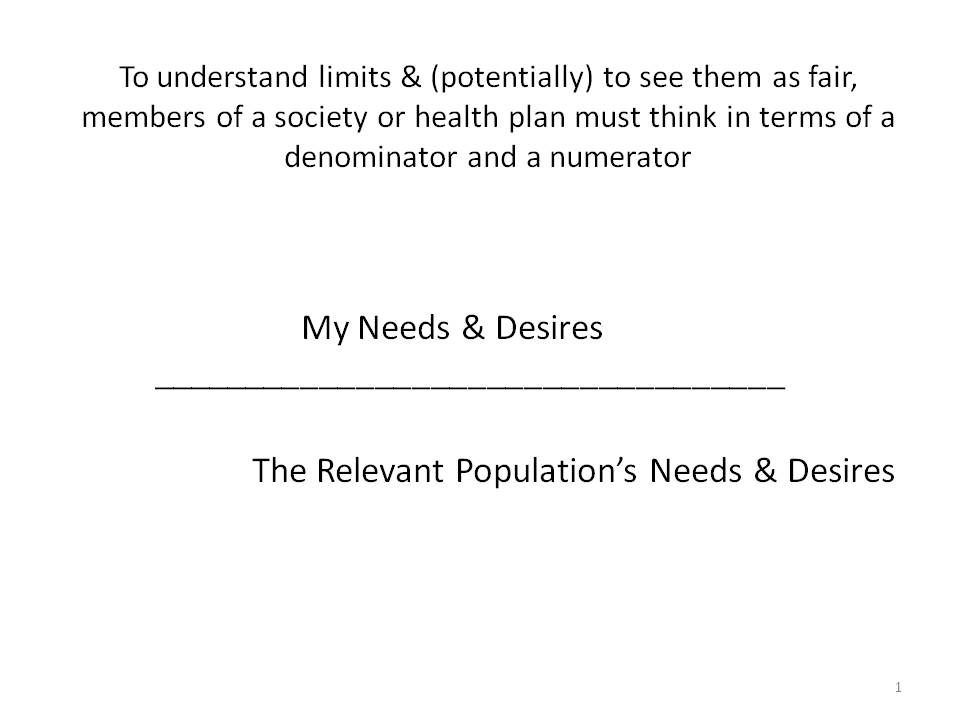
As I'd anticipated, the union leaders evinced a strong sense of solidarity with the insured population and, at the same time, a strong sense of the economic realities of the insurance fund. I presented a diagram I've often used to convey my view of the ethical framework that - ideally - patients, clinicians, purchasers and other stakeholders would use in their dealings with the health system:The idea that we should approach the health system committed to both fidelity to the needs of the individual and stewardship of the resources available for the care of the group was intuitively obvious to the group, as did the metaphor of numerator and denominator that I also like to use::Bringing about a health "system" that is more effective, equitable and efficient in a nation of more than 300 million and a bitterly divided national political process requires won't happen without multiple local initiatives. Oregon, Massachusetts and Vermont show what individual states can do.

The union leaders taught me that union health plans can make important contributions to the national learning curve. Unions are about solidarity on behalf of shared interests. As a population we should be solidly unified on behalf of achieving the best health we're capable of. Sadly, we're not. Union health plans provide a venue in which substantial components of our population are committed to the well-being of each person and, at the same time, to being realistic about how much resource can be devoted to health care. What they learn and demonstrate can help us all.

Tuesday, 1 November 2011

Can We Afford High Cost Pharmaceuticals?

I'm in New Orleans, to meet tomorrow with a group of union leaders who oversee union health plans. They will have read, or at least - I hope - glanced at "Setting Limits Fairly," the book in which Norman Daniels and I presented the "accountability for reasonableness" framework for curbing unsustainable health care costs.

I'm excited at the prospect of working with union leaders. For them the constituency in the health plans they oversee are fellow union members, not impersonal "covered lives," the unfortunate insurance jargon term for you and me. And they know where the health plan funds come from - their own contributions and, perhaps, contributions from their employers, which could otherwise go into wages.

In advance I proposed four premises for the discussion:
  1. Resources are finite.

  2. There are more potentially valuable things that health care can offer than we can pay for.

  3. Organizations like unions that provide health insurance will have to learn to work with questions like "how much is life worth?" in a thoughtful and constructive manner.

  4. High cost pharmacy is a prime area where tough decisions will have to be made.
We'll use two drugs as examples that ultimately require us to acknowledge "how much is life worth?" as a real question. Provenge is a new immunotherapy for minimally symptomatic metastatic prostate cancer not responsive to hormone therapy. It extends median survival for 4.1 months at a cost of $93K. Cerezume is a biologically engineered form of the deficient enzyme in Gaucher's disease. It can produce significant improvements in quality of life for $150K - $250K per year.

In emotional terms, life is priceless. But in economic terms, it isn't.

I'll make the point that avoiding questions about the value of health interventions is a major reason we're in the mess we're in now. We won't solve the cost dilemma until we learn to think in terms of both numerator (my needs and desires) and denominator (the insured population's needs and desires). I'll make the further point that this kind of learning is more emotional than cognitive. And it takes time, so a long term strategy is necessary.

Union health plans, which are likely to have a high degree of solidarity among the insured population, are a promising venue for thinking this way. I hope we'll be able to probe health care costs as "our problem" rather than as something "they" are forcing on us.

I'll write more after I meet with the union leaders.

myPennMedicine: Giving Patients Access to their Online Medical Records

Penn Medicine patients now have access to their online medical records through myPennMedicine. Currently, Penn Medicine is the only health system in the region to offer patients this online health management tool. It gives patients the ability to submit routine requests for prescription refills, referrals or appointments as well as view lab results, medication lists and health summaries without having to pick up the phone.

Learn more about myPennMedicine and register to win a free iPad


Penn Medicine Wants You to Stay Healthy: Get Your Flu Shot Today!

Vaccination is the best protection against contracting the flu. The Centers for Disease Control and Prevention (CDC) recommend that everyone six months of age and older get vaccinated against the flu as soon the 2011-2012 vaccine becomes available.

“Every flu season, different flu viruses develop and spread,” says Charles Schwartz, MD, PennCare® for Kids. “The flu can affect people differently based on their body’s ability to fight infection.”

That is why yearly vaccination is critically important for protection against the flu. Penn Medicine has received its supply of flu vaccine and mist and the staff urges you to make an appointment today.

Read the full article