Tuesday, 10 May 2011

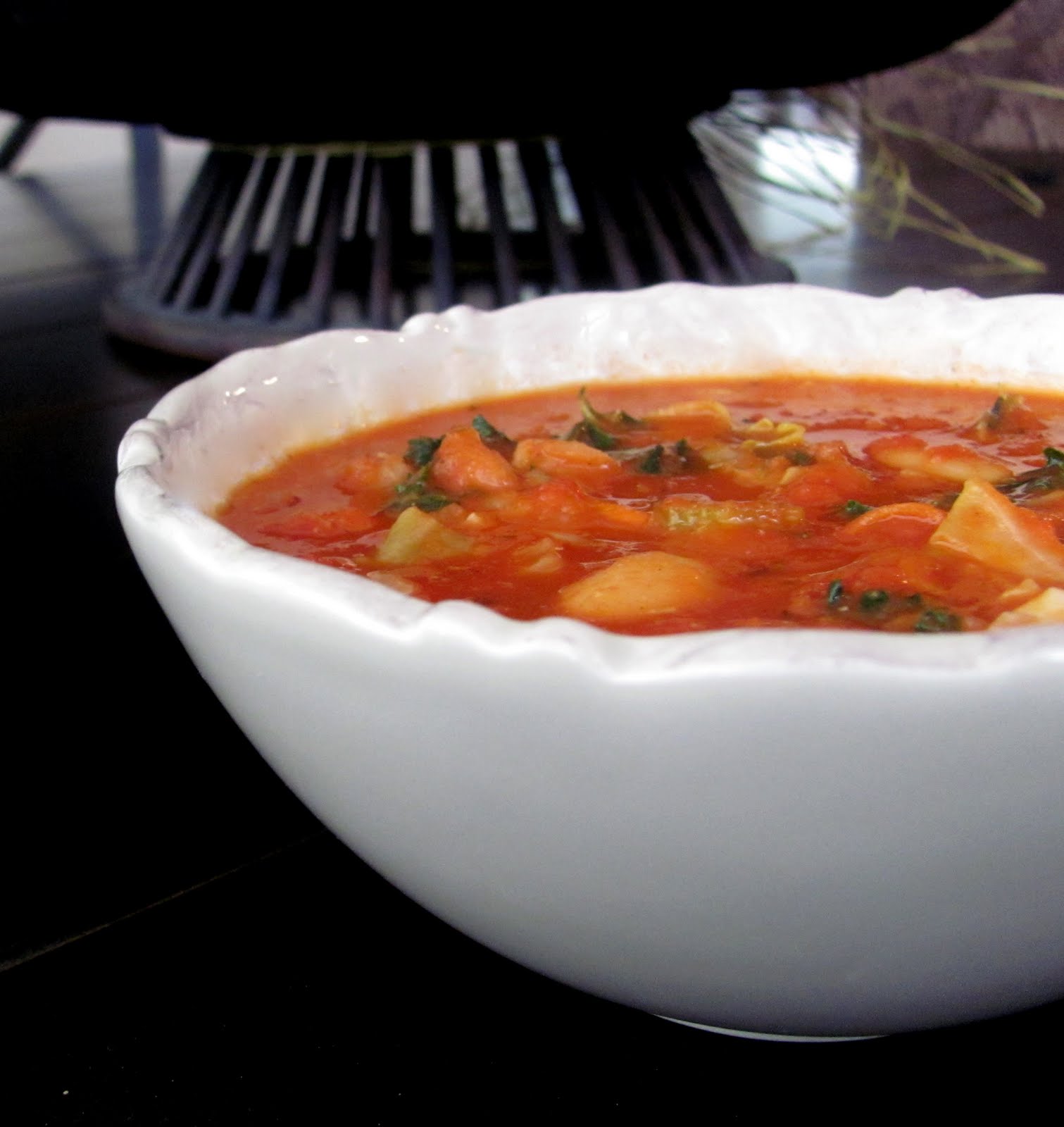
Tuscan Soup

I love creating healthy soups and came up with another yummy one yesterday. You will love the flavors and texture of this soup. This recipe makes enough for leftovers and it tastes even better the next day. Soups are good year round with a big vegetable salad.  They are filling and satisfying when they are loaded with nutrients. Your body feels energetic and satisfyed when you are getting everything you need.  Your body doesn't count calories, it counts nutrients, so make sure you are getting plenty of them.

This soup can be classified as a super-soup! I hope you will give it a try.  I know you will enjoy it.

Tuscan Soup
Printable Recipe
Serves 6

1 tsp. olive oil
1 yellow onion (sliced or diced)
4 cloves of garlic (minced)
2 (28 oz.) cans Muir Organic Diced Fire Roasted Tomatoes (you can substitute regular diced tomatoes)
4 cups salt-free vegetable broth (I use Rapunzel brand)
2 carrots (julienne peeled and then cut into smaller pieces)
2 celery stalks (sliced very thinly)
5 cups cabbage (sliced thinly)
3 large kale leaves (remove center stalk and chop kale into small pieces)(Save one for garnish)
2 tsp. sea salt
1 tsp. dried basil leaves
1/4-1/2 tsp. cayenne pepper or pepper flakes (optional)
2 tsp. dry mustard
2 (15 oz.) can cannellini beans (drained & rinsed) or make your own from scratch.
2 Tbsp. nutritional yeast
1 1/2 Tbsp. maple syrup or agave nectar

1.)  Combine oil, garlic & onions in soup pot and cook until onions are soft.  Add canned tomatoes.  Simmer 10 minutes.

2.)  Use a blender or an immersion hand blender to puree tomatoes and onion. Put back in soup pot.

3.) Add vegetable broth, basil leaves, dry mustard, cayenne pepper, salt, and all vegetables.  Simmer for 10 minutes. 

2.)  Add nutritional yeast, beans & agave nectar. Simmer for 5 minutes.

3.)  Even more delicious the next day. Enjoy:)


Ray Peat - Salt


“Protein, salt, thyroid, and progesterone happen to be thermogenic, increasing heat production and stabilizing body temperature at a higher level.”
~Ray Peat

If you know anything about Peat, you should know the basic 5 things that Peat feels are vital to stimulating the metabolism, increasing cellular metabolic rate and respiration, and improving health and extending the functional lifespan: Progesterone, thyroid, protein, sugar, and salt (and Pepa too let's hope).

Protein, particularly animal protein, when eaten in true excess (more than 1g per pound of lean body mass per day), tends to have a much more negative effect on the rate of metabolism and mitochondrial respiration. But getting insufficient amounts, according to Peat, is a huge drain on the metabolic rate. This shouldn’t be surprising, as the leading advocate of a truly low protein diet, Doug Graham – author of the 80-10-10 Diet, recommends getting your body temperature down to 93 degrees F. Oops.

Progesterone and thyroid are hormones that trigger greater metabolic activity. While everybody knows about thyroid, progesterone evidently has some pro-metabolic effects all on its own. This is why, when women ovulate and progesterone rises, body temperature rises typically by a half degree overnight. Powerful stuff.

Sugar, or carbohydrate, is a powerful stimulator of the conversion of T4 in the active thyroid hormone T3. It has many other reasons why it triggers greater “metabolic intensity,” a term I’m becoming increasingly fond of – some of them related to lowering cortisol, some to increasing glycogen storage, some to increasing glucose oxidation over the more metabolically-suppressive fat oxidation.

And last, but not least, is salt.

Salt is an interesting topic. I’ve never really talked about it in great detail because, well, salt is salt. Who in the world would want to eat a no-salt diet? Or could? I, as a former chef, used to laugh about how salt was the single-most important ingredient separating good food from great food. Salt has a truly remarkable ability to perform alchemy, making flavors that are undetectable suddenly leap out of a dish when the seasoning hits just the right mark. Salt can take Pesto for example, from a grassy, oily sludge into a flavor explosion with a sublime floral essence (hey, if this health researcher thing doesn’t pan out, I could be a good wine critic eh?).

Peat believes that salt has a serious health role to play – at least for some conditions, and some of his reasoning for that belief is very valid.

For starters, those with hypothyroidism have a hell of a hard time retaining salt. The lower the metabolism, the greater the propensity to develop hyponatremia (low sodium levels). This is a tremendous stress – one that can potentially trigger migraine headaches or seizures in epileptics (who are notoriously prone to hyponatramia – probably because hypothyroidism could be a prerequisite for having the disease in the first place). For someone with a low metabolism, even if salt didn’t have some magical metabolically-stimulating property, a good supply of salt is probably a great idea (by the way, for your mo-carb files, Aurora – the girl I no longer date but stalk on Facebook, used to get severe hyponatremia from running on a low-carb diet, and no longer suffers from it while running on a high-carb diet. She loves Gatorade now).

Peat also points out how low-salt diets have been shown to increase inflammation and activate the renin-angiotensin-aldosterone (RAA) system, stimulating greater activity of the sympathetic nervous system. In English, this means that low-salt diets trigger the stress and inflammation chain reaction in the body – like the kind that leads to hypertension.

Yes, ironic isn’t it – we are told to avoid salt because low-salt intake is known to lower blood pressure by a few points in the short-term. According to Peat, the hypertensive state of pre-eclampsia during pregnancy has been known to subside with the addition of salt. Salt could very well be an anti-stress weapon used against the very condition it is supposed to cause according to the strainream.

“The RAA system appears to be crucially involved in all kinds of sickness and degeneration, but the protective effects of sodium are more basic than just helping to prevent activation of that system.”

Anyway, Peat is wild about salt. And maybe he should be. Pumping ill people full of sodium solutions when they get in the emergency room saves lives. Extra-salty solutions have been used to heal wounds very effectively. And if salt is pro-metabolic, anti-stress, and anti-inflammatory to boot – well I’m all for it.

How do you know if salt is something that your health will benefit from? Try adding or subtracting it from your diet with an open mind and see what happens. More importantly, obey your salt “thirst.” Salt cravings often come during pregnancy, during shifts in the menstrual cycle, after hard exercise, and late at night. If you are a salt-craver, odds are you are drawn to salt for a reason. I for one don’t seem to notice much from high levels of salt vs. low – at least not in the short-term, and I never really have a legitimate “craving” for salt the way some people do.

An interesting observation has been to see the low body temperature in my new lady friend, her love of salty foods, and her positive response to it – especially with enhanced sleep with reduced nightmares. As mentioned before, she suffers from epilepsy and has some issues with water retention – all powerful indicators of hypothyroidism.

A friend of hers was recommending today, for health reasons, that she drink a lot of water. She hates water and never drinks it. Is it the intelligence of her body that craves salt and hates water? It might be. I’m on board with that. I mean, no one could tell me that if I were craving sleep that it would be unhealthy for me to take a nap, or that I should go on a jog instead. Anyway, something to think about, especially when low sodium levels are known to trigger seizures. Oh yeah, and drinking water triggers seizures too! Oh but wait, I thought if it was natural it HAD to be good for you!!!

More on the importance of metabolism and health here.


Monday, 9 May 2011

Ray Peat - Broda Barnes

“One of my recurring objects of thought has been the slowness with which raw knowledge is assimilated. For example, I have been thinking about Broda Barnes’s work on the prevention of heart disease with thyroid extract. He did solve much of ‘the riddle of heart attacks,’ but recent statements by the Heart Association show that the dominant forces in the health business haven’t learned anything at all from his work, which he began 50 years ago. His work is clearly presented, not hard to understand, and it is scientifically so sound that no one challenges it, at least not on the scientific level. It is ignored, rejected by people who choose not to be bothered to read it. How many people have died from heart disease, since his work first became available? (And how many more from cancer, tuberculosis, and other diseases he showed occur mainly among hypothyroid people?)”
~Ray Peat

Like myself, Ray Peat was highly impressed with the work of Broda Barnes when he came across it. Ever since, with a deeper understanding of the hormonal and biochemical systems and their relationship with the cellular metabolic rate, Peat has been a firm believer that the preservation of a high level of metabolic intensity is the key to health and resistance to disease – both infectious and degenerative alike. I too have seen very little to sway me away from what is far more compelling than some dumb theory out of left field about villainous saturated fat or carbohydrates or gluten being the root cause of rising rates of many diseases.

Peat often mentions Broda Barnes and the Barnes method of assessing thyroid functionality – the morning temperature test. While I have recommended this simple home monitor for ages, and it is a decent overall indicator – especially when you see it rising in response to diet and lifestyle manipulation, Peat offers much more insight about how to get a better overall assessment of the level of thyroid-generated metabolic activity.

This is actually an incredibly important concept, as body temperature and even metabolic rate are not the be-all end-all in assessing the health of your thyroid hormone system. For example, adrenaline is a powerful stimulator of the metabolic rate. Go into any “health food store” and you are likely to see walls filled with “thermogenic” weight loss formulas like Lipo-6, Slim Quick, Arson, Hydroxycut, and countless others (most of them made by the same company, Iovate). The term “thermogenic” refers to the ability of these stimulant-laced pills to increase heat production in your body.

And yes, even anorexics with very low thyroid output often wake up in the morning, with adrenaline peaking, with a high body temperature and high pulse rate (two of the most prominent indicators of metabolic rate). Eating, however, makes body temperature and pulse rate drop like a stone. In a sense, when adrenal hormone levels are lowered, the true output of the thyroid gland is revealed, and shown to be extremely low. In fact, testing your body temperature and pulse before and after meals is actually a pretty decent way to tell whether or not your adrenal glands are overactive. If pulse and body temperature drop, your adrenal glands were likely way too active prior to eating. All I have to do is eat low-carb for a couple of days and then have a big carbohydrate meal to trigger this – or even just skipping breakfast or a hard workout will do this.

If you don’t feel like monitoring, just assessing how you feel before and after the meal is very revealing. If you feel tired and sleepy and brainfogged (like when needing a cup of coffee to boost adrenaline) after eating, odds are your adrenals were overactive prior. Feelings you might feel prior to eating in a high adrenaline state are mental focus, nervousness or anxiety, jitteriness or irritability, and the big one – cold hands, feet, and tip of your nose (blood rushes away from the extremities when adrenaline surges).

According to Peat, this may be a better indicator of true thyroid function than an actual body temperature reading because of the interference you can get with the adrenal hormones on a body temperature reading. My real world experience thus far suggests that this might be the case. JT and I both for example, had healthy body temperatures on diets that destroyed our health via signs and symptoms of adrenal fatigue (and in JT’s case, actual diagnosed severe adrenal fatigue). My body temperature actually fell when I initially started doing RRARF, while the health problems I incurred on a low-carbohydrate diet vanished. Eat to keep fingers and toes warm and you might just find your health improving.

Peat also points out that Colorado, where Barnes was a medical practitioner, made the body temperature reading that Barnes relied upon more accurate – as the weather there is cool enough most of the year that low thyroid function would indeed surface with low body temperatures. In warmer weather, body temperatures could still be held at 98.6 F even in a hypothyroid state, due to the ease of maintaining a higher body temperature in warmer weather.

This comment is both true and false. For starters, Denver ain’t that cool. One year I lived there saw 60 days over 90 degrees F. You also can maintain body heat just as well wrapped in warm clothes in cold weather as you can in shorts and a t-shirt in warm weather. And in today’s day and age, no matter where you live, odds are everywhere you go is relatively climate controlled with air conditioning and heat. Climate is something that humans have managed to distance themselves from pretty well at this point. And Barnes’s subjects were taking their body temperature first thing in the morning, covered with blankets and toasty as can be.

But, I have noticed myself, as I do not use air conditioning in the Matt Cave, that my body temperature gets extremely warm late in the afternoon as I sit in my shorts and sweat in 85-degree heat. My body temperature, while just under 99 degrees F in the morning (rectal, huh huh), climbs up close to 100 degrees F when I am physically feeling hot and sweaty. After a MAXercise session the other day when I was feeling even hotter my temperature sprang up to 100.7 F! So yes, if you feel hot, body temperature will be artificially elevated. But most people do not feel excessively hot when taking a morning basal body temperature reading, so I find this to be somewhat of an irrelevant point that Peat is all too fond of making in interviews.

Peat prefers to look at all of the indicators as a whole, which is a fantastic idea. Barnes was a medical practitioner. He had a lot of hands on experience with diagnosing and treating patients for hypothyroidism. But he certainly did not possess the vast knowledge of human physiology and hormonal interactions that Peat seems to possess. According to Peat, one of the best tests is simply seeing how much oxygen and carbon dioxide you inhale and exhale. The more oxygen you take in, the higher your metabolism. But if carbon dioxide is low, you are in a high adrenaline state (burning fat for fuel instead of glucose lowers carbon dioxide levels, and adrenaline favors fat burning while thyroid-generated metabolism favors more glucose oxidation, yielding greater carbon dioxide levels).

Calorie consumption that is abnormally high or low for your body weight is yet another indicator that Peat believes should be taken into consideration when trying to get the best overall assessment.

Anyway, the point of this post is simply that Peat acknowledges the work of Broda Barnes as being highly significant. Few could argue that it is not. But Peat has looked deeper into the big picture and has a much broader understanding of the many factors, thyroid hormones as well as thyroid-stimulating hormone (TSH), adrenal hormone interaction, and other factors involved.

Body temperature is just one tool in the bag. It is not the only tool. Assessments of the warmth of your feet and hands, sleep quality, the number of hours you can comfortably go without eating, pulse rate, sex drive, energy levels, fatigue after eating, bowel frequency, water consumption (should be high), calorie consumption, reflex quickness, blood glucose levels – both fasting and postmeal, menstrual regularity – anything and everything should be used in making an overall assessment of your health and self-diagnosing what may be needed to rebalance your “body chemistry” as Melvin Page called it. With those in mind, you can use nutrition and lifestyle change to the fullest.

Taking all that into consideration, you can use something like this program on how to raise your metabolism wisely, paying close attention and tweaking meal frequency, carbohydrate, fat, and protein levels – as well as even levels of salt or experimenting with starch vs. sugar and vice versa in restoring and/or maintaining your health. Most find this approach to be much more effective than they thought it would be. Simple changes often make a big difference. Drastic changes often lead to excessive blogging, ruin your health, and make your parents and remaining friends (the ones that weren’t so weirded out by your fanaticism they stopped calling you) worry about you.

More from Ray Peat on the subject....

Sunday, 8 May 2011

A Busy Month

My schedule has been very full lately, and it looks like I’ll miss this posting target by a week. My apologies. This will be an odds-and-ends post about some events that took place, and topics that came up, in April:
* Presentations
* A demonstration of the power of reducing cost of production in a pasture-based dairy
* Grain-feeding is not the cause, nor grass-feeding the cure, for E. coli O157:H7
* A Nutrition and Metabolism Society get together in the Pacific Northwest
* A hammered dulcimer gathering
All in one post!
**********************
On April 9th I spoke to the Douglas County Livestock Association's Spring Livestock Conference. The audience was an engaged one, and I enjoyed some wonderful interaction with several attendees. One of them was Craig Reed, a reporter for the Capital Press. He wrote an article about my presentation, which was posted on the 21st. If I could make a change, it would be in the title, “Expert sees protein as balm for obesity woes.” I’d replace “protein” with “meat” or “fat.” Despite that, I think it’s a pretty good article in a widely distributed agricultural publication. It was also a great exercise in “sharpening-up” the message.
***********************
The Power of Reducing Cost of Production
American agriculture has been thoroughly infected with the “more-and-bigger’s-better” virus that seems endemic to the rest of American culture. The focus of American agriculture has been on increasing production per head or per acre, rather than on the cost of that increase production. There’s an old joke about a rancher lamenting the fact that he was losing one dollar for every calf he sold. His solution was “I’d better sell more calves!” Humor only works when there’s truth in it, today’s high prices for cattle and sheep notwithstanding.

There are three economic levers a farmer or rancher can manipulate to influence the profitability of their farm or ranch: the amount of products they produce, the price they get for their products, and what it costs to produce those products. The cost of production may be the most powerful of these levers.
Swallow house - organic fly control
On April 12th I took part in a field trip as part of the Oregon State University Forage Production Class. We visited Jon and Julianne Bansen’s Double J Jerseys farm in Monmouth, Oregon. They are part of the Organic Valley Cooperative. It was a beautiful day, a one-day break in our otherwise cool, rainy “spring. ” The sparrows (the Bansen’s organic fly control) had finally returned the week before, a couple of weeks later than normal. The cows had only recently begun their grazing season. Jon believes that he’s proven what he was told by some New Zealand dairymen – it takes 20 years to become a good grazier. About twenty years ago, their average milk production per cow was pushing 19,000 pounds of milk. The cows were grazing pasture, but they were also receiving approximately 20 pounds of grain per head per day.
April grazing in the Willamette Valley
Jon has learned a great deal since then. His rotation management has improved and he’s made significant investments in his pasture “facilities.” He’s learned a great deal about conserving excess pasture as baleage – grass & clover silage in plastic-wrapped large round bales. Today he feeds approximately 2 pounds of grain per cow per day. His average milk production today is 12,000 pounds of milk per cow. Reduced production?!? Why, that’s un-American!! But here’s the power of the cost of production lever - His feed cost went from 50% of his milk check to 6%! He figures he’s doubled his profit! His cows have a productive life that’s 2.5 times the national average. And Jon feels he and his family (and his cows, too!) have a better quality of life.
Concrete pathways, sound fences,
water in each paddock,
pasture renovation. Essential expenses!
It is important to remember, however, that low cost of production does NOT equal low cost. Proper fences, water for his cows in every paddock, concrete walkways, and pasture renovation all cost. Cutting back on these expenses will NOT produce the results he has achieved.
*****************
On April 16th I gave my “Turning the Food Pyramid Upside Down” presentation at the Small Farm Trade Fair in Madras, Oregon. This event, its 35th year as I understand, was produced by the Small Farmer’s Journal. This journal (“A tool for self sufficiency Starting your farm and keeping it going All in unison with nature”) focuses on animal-powered agriculture. The weather wasn’t helpful, but it was still a wonderful weekend. I met a number of interesting folks and learned about a wonderful program, Tera Nova Community Farm, that incorporates organic vegetable production into the education program at a Big Picture school in Beaverton, Oregon. I was reminded that the “small farm” community is a tremendously broad one, with many different philosophies and guiding principles.

Central Oregon pasture in April
*****************
More New Conventional Wisdom

Early in April, a fellow member of the Nutrition and Metabolism Society told me about an upcoming webinar. Thanks to him, on April 19th I “attended” the Washington State University webinar “Pre-harvest E. coli O157:H7 in cattle” by Dr David Smith from the University of Nebraska.

Escherichia coli O157:H7 is an important food born pathogen. And, I’m afraid, it’s another example of the new conventional wisdom. I have frequently heard or read someone from the organic, grassfed, and/or low-carb/primal/paleo communities say that grain-feeding produces or promotes E. coli O157:H7 while grass feeding eliminates or reduces it. The science, I’m afraid does not support this claim. In fact, studies show that there is no difference in the prevalence of E. coli O157:H7 in live animals fed a variety of diets (Fegan, et al., 2004, Van Baale, et al., 2011)

A very small USDA study of a handful of cattle in 1998 did suggest that feeding cattle hay could reduce E. coli O157:H7 (Diego-Gonzales, et al., 1998), but that small study’s findings were never duplicated in larger research. More than a decade later, a large, accumulated body of research strongly suggests that E. coli O157:H7 appears to be a natural bacterium found in the gut of cattle regardless of production system.

“Organic” and “natural” methods don’t seem to impact bacteria in the gut either. In 2009, researchers examined the incidence of pathogenic E. coli O157:H7 in organic and naturally raised cattle and concluded, “Our study found similar prevalences of E. coli O157:H7 in the feces of organically and naturally raised beef cattle, and our prevalence estimates for cattle in these types of production systems are similar to those reported previously for conventionally raised feedlot cattle.” (Reinstein, et al., 2009)

Proper butchering, handling, and preparation practices are the best defense against E. coli O157:H7 and other food-borne illnesses. The good news is that, despite (or perhaps because of) increased vigilance and improved diagnostic technologies, the incidence of E. coli O157:H7 contamination and disease have declined dramatically.

Data from the U.S. Department of Agriculture Food Safety and Inspection Service (USDA FSIS) show that the presence of E. coli O157:H7 in raw ground beef products declined by 63 percent between 2000 and 2009 to approximately one third of one percent of ground beef samples tested. That means that the pathogen will only be found in approximately 1 in 300 samples (USDA).

In 2010 the Centers for Disease Control and Prevention (CDC) announced that food-borne illnesses are declining. In particular, the CDC said that the U.S. had achieved its Healthy People 2010 public health goal of less than one E. coli O157:H7 illness per 100,000 people (CDC, 2010). This decline has occurred as public health tracking has expanded significantly. In 1993 few states tracked E. coli O157:H7 infections in people. Today, every state in the U.S. routinely monitors the incidence of these infections and reports to federal officials. The observation of a decline, under these conditions of increased scrutiny, is encouraging.

While an E. coli infection is a serious illness, especially for the young, elderly, or those with a compromised immune system, it causes less than a tenth of the total deaths due to Salmonella or Listeria. Less than 3% of all deaths due to food-borne pathogens in the US each year are due to E. coli O157:H7, while Salmonella and Listeria are responsible for 31 and 28 percent, respectively (Mead, et al., 1999).

But one E. coli O157:H7 illness in 100,000 people per year sounds pretty high, doesn’t it? Well let’s compare it to your one-year risk of dying* as a result of: a car accident (approximately one out of 6500); murder or falling (one in 16,500); walking across the street (one in 48,500); drowning or fire (one in 88,000) (Bailey, 2006).

* less than 1% of E. coli O157:H7 cases are fatal (Mead, et al., 1999)

References:

Bailey, R. 2006. "Don't Be Terrorized: You're more likely to die of a car accident, drowning, fire, or murder." Reason.com. Accessed at http://reason.com/archives/2006/08/11/dont-be-terrorized, May 8, 2011.

CDC. 2010. CDC Press Release, "CDC Report Shows Success in Fighting E. coli O157:H7." April 23, 2010, Accessed at http://www.cdc.gov/media/pressrel/2010/r100415b.htm, May 8, 2011.

Diego-Gonzales, F., T. R. Callaway, M. G. Kizoulis, and J. B. Russell. 1998. "Grain Feeding and the Dissemination of Acid-Resistant Escherichia coli from Cattle." Science 11 September 1998: 281(5383)1666-1668.

Fegan, N., P. Vanderlinde, G. Higgs, and P. Desmarchelier. 2004. "The prevalence and concentration of Escherichia coli O157 in faeces of cattle from different production systems at slaughter." Journal of Applied Microbiology. 97, 362-370. Accessed at http://www3.interscience.wiley.com/journal/118807187/abstract?CRETRY=1&SRETRY=0 May 8, 2011.

Mead, P. S., L. S., V. Dietz, L. F. McCaig, J. S. Bresee, C. Shapiro, P. M. Griffin, and R. V. Tauxe. 1999. "Synopses: Food-Related Illness and Death in the United States." Vol. 5 No. 5. Centers for Disease Control and Prevention, Atlanta, Georgia. Accessed at http://www.cdc.gov/ncidod/eid/vol5no5/mead.htm, May 8, 2011.

Reinstein, S., J. T. Fox, X. Shi, M. J. Alam, D. G. Renter, and T. G. Nagaraja. 2009. "Prevalence of Escherichia coli O157:H7 in Organically and Naturally Raised Beef Cattle." Applied and Environmental Microbiology.75(16):5421-5423.

USDA Food Safety and Inspection Service. "Microbiological Testing Program for Escherichia coli O157:H7." Accessed at http://www.fsis.usda.gov/Science/ground_beef_e.Coli_Testing_results/index.asp, May 8, 2011.

Van Baale, M. J., J. M. Sargeant, D. P. Gnad, B. M. DeBey, K. F. Lechtenberg, and T. G. Nagaraja. 2004. "Effect of Forage or Grain Diets with or without Monensin on Ruminal Persistence and Fecal Escherichia coli O157:H7 in Cattle." Applied and Environmental Microbiology. 70(9):5336-5342. Accessed at http://aem.asm.org/cgi/content/abstract/70/9/5336, May 8, 2011.

******************
A cell biologist, an author, a psychiatrist and a forage agronomist meet for dinner …

No, that isn’t the opening line of a joke. It really happened!

Judy Barnes Baker, Dr. Ann Childers, yours truly, and Dr. Richard Feinman
On April 21st I met with Judy Barnes Baker, Dr. Ann Childers, and Dr. Feinman, founder of the Nutrition and Metabolism Society, for a get together and brainstorming session in Portland. We enjoyed a lovely dinner at Veritable Quandary.

Judy Barnes Baker, is the author of Carb Wars; Sugar is the New Fat. She has posted on our meeting at her blog Carb Wars.

Dr. Ann Childers, a fellow member of the Healthy Nation Coalition as well as the Nutrition and Metabolism Society, is a child and adult-trained psychiatric physician who focuses on nutrition in treating her patients. Anyone interested in mind-diet interactions should follow her blog.

I’d met Dr. Feinman in Seattle last year at the joint meeting of the American Society of Bariatric Physicians and Nutrition and Metabolism Society. His scientific background and his passion about confronting the conventional make him a fascinating dinner partner. He’s recently started blogging, and it’s well worth reading.

The mission statement of the Nutrition and Metabolism Society states:

"The Metabolism Society is dedicated to addressing the problems of obesity, diabetes & cardiovascular disease through public awareness and education. The Society believes specifically that the therapeutic potential of carbohydrate-restricted diets for the treatment of these diseases is under-investigated and under-utilized. The Society seeks to support research in this area....Our mission is to improve current nutritional guidelines and to see that sound scientific information is provided for the public."

You can be a part of this important work by joining the Metabolism Society for only $10.00 a year! More information about ways you can support truth in science is here: http://www.nmsociety.org/

******************

Because music is important to our health, too
Steve Schneider, Dee Dee Tibbits, Yours Truly, Lawrence Huntley,
Mick Doherty (my teacher), Rick Fogel (made my dulcimer)

April ended and May began with the Spring Fling Rendezvous Hammered Dulcimer Gathering in Sandy, Oregon. I’ve organized and produced this event for the past twelve years. For the last eight years it has been held at Oral Hull Park, which is run by the Oral Hull Foundation for the Blind (a truly worth cause if you’re looking for a cause to support). This year’s three featured instructors, Dee Dee Tibbits, Steve Schneider, and Kendra Ward (and her husband Bob Bence) joined the “local boys” (Mick Doherty, Rick Fogel, Lawrence Huntley, and Carl Thor). These instructors provided a wonderful weekend for 42 hammered dulcimer players from eight different states. I’ve posted several pictures, if you’re interested: vol 1 and vol 2.

*****************
Now to get back on track and post on the 15th! It will be on some more items of new conventional wisdom - hormone and antibiotic use in animal agriculture.
*****************

Ray Peat – Epilepsy


I was going to write about something motherly today, but then I started geeking out major on one of Ray Peat’s articles that I had not read before – Epilepsy and Progesterone. It’s Mother’s Day-related no doubt, as the only mother I’m helping to celebrate the day with in person suffers severely from the condition – to the point where she is not legally able to drive, and has never owned a car. Spending the last couple of months with her has provided crystal clear insights into this disease – and my suspicions, my observations, her past and present experiences, and Peat’s article all match up perfectly in countless ways.

I will cut to the chase, so that any sufferer of epilepsy that arrives at this site will have information that will give them more understanding and assistance with the condition than they have ever received elsewhere – and give them a roadmap for how to keep the condition at bay to the extent where the brain-damaging drugs used to suppress this disease are no longer required.

For starters, seizures are no doubt caused by a great deal of excitation in the brain. Glutamate and aspartate, as Peat points out in his article, are potent excitants. There is no shortage of hits when you do a search for “aspartame and epilepsy” on Google either.  Of course, the modern diet has been totally infiltrated with lots of sources of free glutamate and aspartate. In fact, these names should ring a bell, as in monosodium glutamate or MSG, and aspartame – the prevalent sweetener found in Diet Coke and “the pink sugar,” as subject A calls it.

Not surprisingly, subject A started having seizures at a young age. When I heard this I immediately thought about her Diet Coke habit. In fact, we teased each other initially as I drank, what to her, was an enormous amount of water. In the past two months I’ve seen her consume one glass of water, a half dozen or so coffees sweetened with “the pink sugar” when available, 1 Sprite, and the rest has been Diet Coke. She literally doesn’t drink anything else. 95% of her fluid intake is Diet Coke. I asked her how long she had been drinking it and she said, “literally as long as I can remember.”

Epilepsy treatment #1 – Remove all sources of aspartame and monosodium glutamate (found, for all practical purposes, in salty-tasting food that you don’t make from scratch yourself) from your diet. These are highly addictive substances, so wean yourself off of them slowly. The stress of withdrawals could also trigger an epileptic episode and/or other health problems.

Peat also discusses the inter-relationships between thyroid hormone, unopposed estrogen, and progesterone like he so typically does when it comes to any topic. He does so because there literally isn’t a common health problem that I’m aware of that, in generalization-speak, doesn’t have some relationship with reduced metabolic activity (which affects progesterone and estrogen and vice versa). Before ever coming across Peat’s work, I had come to this conclusion myself through the study of other authors, scientists, and health professionals.

The clearest way to gauge the health and effectiveness of your thyroid and metabolism is simply to take a body temperature reading. Subject A’s body temperature has always been chronically low, hovering in the 95’s and 96’s.

Epilepsy Treatment #2 – Follow this program that describes how to speed up your metabolism with diet and lifestyle manipulation. Body temperature rises in the vast majority of cases, and even feeding subject A food for a couple of weeks before she panicked and went back into another round of dieting was enough to bring her warmth levels up tremendously, with substantial loss of edema/water retention (4 pound weight loss in the first 10 days or so with an estimated tripling of caloric intake) – another one of the hallmarks of seizure-proneness according to Peat...

“Water retention and low sodium increase susceptibility to seizures.”

“Thyroid does many things to protect against seizures. It keeps estrogen and adrenal hormones low, and increases production of progesterone and pregnenolone. It facilitates retention of magnesium and of sodium, and prevents edema in a variety of ways.”
~Ray Peat

Of course, dieting is the ultimate immediate threat upon any metabolism, and she has been losing weight for many months by eating fewer than 1,000 calories per day. While fasting keeps her blood sugar relatively stable during the dieting itself, the most dangerous time for triggering seizures has been, without question, after eating a large meal.

When dieting, or after having lost excessive amounts of weight (she is 100 pounds down from her weight at age 19, and minus 30-ish pounds from late last year when she started this anorexic round), glucose metabolism as well as liver function becomes highly impaired. I have yet to come across a single case of a person who is highly underfed that doesn’t enter into a serious state of hypoglycemia after eating a big carbohydrate load (she was asked to leave work yesterday after eating pancakes for breakfast due to rudeness to customers – after getting home she had a long series of mini seizures). Of course, low blood sugar levels or true hypoglycemia is rare – but the rapid escalation of the catabolic hormones to bring blood sugar levels back up after sugar levels have been driven down is something I classify as “hypoglycemia” regardless of what the sugar levels in the blood may be at any given moment.

“Hypoglycemia, in itself, like oxygen deprivation, is enough to cause convulsions.”
~Ray Peat

Of course, not eating is not an option, but just as the hypoglycemia worsens with prolonged food deprivation – the hypoglycemia continually improves with prolonged food surplus. Eat the food, never allowing yourself to get too hungry or shaky or going more than a few hours without at least a little something to snack on. The standard recommendations for hypoglycemics is to eat low-carbohydrate, high-protein diets. In my experience, this is a good way to medicate the condition in the short-term but stay hypoglycemic forever. You can overcome the condition, but it takes consuming lots of carbohydrates to achieve it, and only happens when the health of the metabolism and liver have been repaired through nutritional superabundance. But be careful to have abundant food supplies on hand to eat immediately when symptoms of hypoglycemia start to emerge. It’s certainly a good idea to overcome hypoglycemia before you even think about weaning yourself off of medication.

To me it has always been obvious that hypoglycemia and impaired glucose metabolism is a frequent trigger of seizures, as one common dietary approach that has been used with success has been the ketogenic diet. Ketones provide an alternate fuel source that evades the perils of riding the blood glucose rollercoaster that comes when someone with impaired glucose metabolism repeatedly ingests large loads of carbohydrates. But that doesn’t mean that the ketogenic diet is the right way or the ultimate way. Walking will indeed get you from Los Angeles to New York, but that doesn’t mean that walking is now the answer for travel and all other traveling methods are to be excluded. In reality, the ketogenic diet as it is prescribed to epileptics (85% of calories from fat) is extremely unhealthy, often leading to other health problems, mineral deficiencies, etc. Plus it sucks.

Epilepsy Treatment #3 – Eat plenty of food. Never diet or make overly drastic restrictions in carbohydrates, fats, and so forth (of course, there is room to tinker with ratios somewhat). Don’t diet, regardless of how much you weigh. Dieting has been proven to be ineffective for long-term weight loss for the majority of people, and repeatedly leads to higher rates of illnesses such as type 2 diabetes, heart disease, and “minor” health problems (which would include epilepsy).

Subject A has repeatedly mentioned that stress – whether emotional or from sleep loss or otherwise has been the obvious trigger of most of her seizures throughout the quarter century that she has suffered from the condition. A good friend of hers that had epilepsy died on the track from a grand mal seizure after placing third in a running event.

Ray Peat states…

“Seizures can be caused by lack of glucose, lack of oxygen, vitamin B6 deficiency, and magnesium deficiency. They are more likely to occur during the night, during puberty, premenstrually, during pregnancy, during the first year of life, and can be triggered by hyperventilation, running, strong emotions, or unusual sensory stimulation.”

Epilepsy Treatment #4 – Be wary of stressful situations, and use things that are under your control to mitigate stress – most notably avoiding alcohol and drugs, getting plenty of sleep, avoiding overly strenuous exercise, having a regular bedtime that you adhere to closely, and using food as an anti-stress tool by eating plenty of food, plenty of carbohydrates, and very frequently.

Ray Peat also feels like free radical production plays a role in seizures as well. Of course, any stress (like a hard run) can trigger a free radical cascade. This is compounded by Ray Peat’s primary dietary villain, polyunsaturated fat. Polyunsaturated fat oxidizes more readily both outside and inside our bodies. Sure enough, some of subject A’s favorite foods have historically been very high in polyunsaturated fat… chips (she said there was always a whole cabinet full of chips – which she was particularly drawn to – probably because of her intuitive liking for salt which would make sense), peanut butter, fatty commercial pork (ribs, sausage and gravy), and she has eaten a great deal of restaurant and processed food in general throughout her life. She hates cooking with a passion.

Epilepsy Treatment #5 – Eat a diet low in polyunsaturated fat and high in saturated fat instead, which Peat strongly feels is protective against free radicals. Coconut oil is the best cooking oil. Butter, cream, and other full fat dairy products are good options for making food rich and palatable. Beef and fish are better choices than pork and poultry. Most nuts and seeds, with the exception of macadamia nuts, are too high in polyunsaturated fat to eat in large quantities – although another Peat paradox emerges here, as nuts and seeds are the highest sources of vitamin E, perhaps the most protective nutrient against free radicals.

Epilepsy Treatment #6 – As Peat suggests, diet and lifestyle manipulation may not be sufficient to raise thyroid and progesterone enough to be protected. You may need to supplement with these hormones if you cannot manage the disease otherwise. But according to Peat, supplementing these can be highly effective.

This all may not sound like rocket science, but do not underestimate the power of keeping the body in a state of balance and optimal functioning – which means a high cellular metabolic rate, low levels of the stress hormones, and the resulting balanced levels of sodium, potassium, magnesium, calcium, urea, and other elements linked to seizures that are all positively impacted by these important hormonal alterations.

More information on all of these provisions can be found in this free book on how to boost your metabolism.

Oh yeah, and eat plenty of salt. Subject A seems to think that sodium is bad for you and tries to avoid eating it even though she likes salty foods. Oops. I made some homemade fried chicken (polyunsaturated fat OMG! – don’t worry it was fried in coconut oil) last night that was so salty I could barely eat it. She slept like the money and is feeling the best she has in a week or longer today.

And, since it's Mother's Day... especially if your mother is epileptic, treat her right...


Saturday, 7 May 2011

Ray Peat – Protein and Vegetarian Diets


“Vegetarians often notice temporary exhilaration when they stop eating meat, probably because their thyroid has been suppressed. But a more serious hypothyroid state often follows, from a low protein inadequate vegetarian diet. Low protein diets definitely interfere with the liver’s ability to detoxify estrogen and other stressors.”


“A few years ago, most of the nutritional problems that I saw were caused by physicians, by refined convenience foods, and by poverty. Recently, most of the problems seem to be caused by badly designed vegetarian diets, or by acceptance of the idea that 40 grams of protein per day is sufficient. The liver and other organs deteriorate rapidly on low-protein diets. Observe the faces of the wheat-grass promoters, the millet-eaters, and the ‘anti-mucus’ dieters, and other low-protein people. Do they look old for their age?”
~Ray Peat

I don’t sense that Ray Peat has much love for vegetarian diets. While I would never want to outright say that eating a predominantly vegetarian diet that contains at least occasional consumption of meat, seafood, dairy, and eggs is harmful – as this might create fear of eating this way in someone that stands to improve their health tremendously on such a regimen (this seems like a great therapeutic diet for a long-time low-carber, and I’m pretty certain I could thrive on this type of diet), there’s no question that many of the vegetarian diets being followed by today’s young and naïve, morally-delusional, and environmentally-confused health enthusiasts is extremely treacherous.

First let’s examine Peat’s first quote, as this ties into the metabolically-suppressive nature of certain amino acids…

Throughout my research I see the theme repeated that protein is suppressive to the metabolic rate (and protein restriction supposedly can trigger increases in thermogenesis – but perhaps this is just a short-term effect from the spike in catabolic hormones similar to taking amphetamines, which would explain the vegetarian’s short-term feeling of “exhilaration”) – and this is coming from those who are more honed in on metabolic rate than any in history – such as Peat himself and Broda Barnes.

In particularly, animal protein seems to have this effect more than any other. I used to just assume it was total protein, but it appears that certain amino acids in particular have that effect, notably cysteine, methionine, and tryptophan. A big portion of Peat’s work revolves around these amino acids, and obtaining ample protein without taking in excesses of these particular amino acids – or at the very least balancing them out with anti-inflammatory amino acids that are not a drain on the metabolic rate by consuming a considerable amount of protein in the form of fruit, juice, potatoes, and gelatin.

This is quite an interesting finding. If it is indeed true that these amino acids – despite perhaps being incredibly vital during growth and development as they help to build lean tissue (particularly in things like, whey protein and egg whites – the staples of body builders looking to add muscle), have an anti-metabolic effect…

Then it would tie several theories and observations together. For one, it’s safe to say, as a generalization, that Americans consume the highest ratio of muscle meat to gelatin (from collagen, skin, bone, and broth – many of which have been deleted from the diet with the selection of more tender meats and stigmas against the non-muscle parts of the animal that do not contain nearly as much of the anti-metabolic amino acids). So the observation that America, more so than most countries, is richer in health problems related to subdued metabolic rate – such as type 2 diabetes, heart disease, cancer, autoimmune disease, constipation and the digestive problems that stem from it, infertility, and so forth does not contradict this.

We also see many reports of the supposed superiority of a “plant-based diet” when it comes to longevity and what not. While this is highly debatable, that general belief is quite prevalent.

An even bigger stimulator of debate, the world famous China Study findings were reported as being that animal protein had strong associations with degenerative disease while plant proteins did not. There’s no telling why this observation was made (or how much the data was falsified and taken out of context by Campbell), or if it really did have something to do with the fact that plant proteins, generally-speaking, are lower in Peat’s evil 3 amino acids – particularly methionine and cysteine. For example, the areas with the greatest meat consumption could have easily been the largest people (a theme observed by explorers like Weston A. Price or Robert McCarrison) – which as we’ve discussed recently isn’t necessarily a life extension trait. In fact, I highly suspect that reduced body size is probably the reason that calorie restriction used in laboratory animals at birth does extend the lifespan (just like small dogs outliving big dogs, a parallel made by the great Peat himself). It obviously isn’t the reduction of calories alone, as reducing calories in adult laboratory animals causes early death…

LINK

Anyway, the point being is that we don’t know if the findings of the China Study really did have something directly to do with the amino acids methionine, cysteine, and tryptophan. It could have been stunted growth from insufficient protein intake, calorie restriction from the areas with low meat consumption generally being the poorer areas, or some other factor altogether – like meat consumption increasing the farther North you go in the country – distance from the equator appears to be a risk factor for many health conditions (multiple sclerosis, depression, etc.). But the finding that animal protein increased morbidity and mortality rates matches up with Peat’s theories.

This ties in well to Kilmer McCully’s homocysteine theory as well, (discussed in THIS post and THIS post) showing that, in a circumstance of B-vitamin deficiencies, methionine, found in highest concentrations in animal protein, is not metabolized correctly (disturbances in the “methylation cycle” which can cause an accumulation of homocysteine – a highly-inflammatory substance with strong ties to heart disease and other conditions). The perfect nutritional storm for creating high levels of homocysteine is eating a ton of animal protein with a bunch of refined carbohydrates that have been stripped of their B-vitamins. This is, of course, the American diet in a nutshell – the home of skinless chicken breasts, egg white omelets, low-fat cheese, skim milk, protein powders and bars, and the world’s most impressive refined sugar consumption (the zero nutrient food).

And finally, if these amino acids in excess really do cause additional inflammation and lower the metabolism, you’ll have trouble finding a disease out there that isn’t somehow linked to reduced cellular energy production (i.e. lowered metabolic rate on a per cell basis), overproduction of inflammation, or both.

What is strange about all this is Peat’s solution – or rather how it translates to his blanket dietary prescription. You can read from the second quote that Peat is a big advocate of a relatively high protein diet. Then he points out the dangers of consuming excess animal protein. He also bashes the consumption of legumes, grains, nuts, and seeds – the highest sources of protein in the plant kingdom that are so fabulously low in most of the three inflammatory, anti-metabolic amino acids (an exception might be, peanuts, which contain lots of tryptophan). Of course, eating more legumes, grains, nuts, and seeds instead of animal protein has long been the solution offered up, and are the standbys of your typical vegetarian that Peat criticizes…

“Besides fasting, or chronic protein deficiency, the common causes of hypothyroidism are excessive stress or ‘aerobic’ (i.e. anaerobic) exercise, and diets containing beans, lentils, nuts, unsaturated fats (including carotene), and undercooked broccoli, cauliflower, cabbage, or mustard greens. Many health conscious people become hypothyroid with a synergistic program of undercooked vegetables, legumes instead of animal proteins, oils instead of butter, carotene instead of vitamin A, and breathless exercise instead of a stimulating life.”

And thus enters what is always the biggest problem that I have with Peat’s work and general recommendations – on protein, with exercise which we will discuss later in the month, and in general. All foods have both positive and negative attributes.

Specific to protein, Peat recommends getting lots of protein from eggs, lean fish, shellfish, and dairy primarily – balanced by fruit and gelatin. Yet, these foods contain massive amounts of tryptophan, methionine, and cysteine. Anyone else reviewing the protein issue would steer someone towards eating a more moderate amount of protein, and eating more starchy foods high in protein (like grains, root vegetables, nuts, seeds, and legumes). He recommends these foods because they are apparently more “balanced” and the nutritional quality of these foods is superior to muscle meats.

But you are still left with a catch-22 and a huge unanswerable question… will the amino acids in animal proteins lower your metabolism and cause more inflammation? Or will the lectins and anti-nutrients in legumes and grains lower your metabolism and cause you more inflammation? No one knows. Peat seems to justify this based on the idea that estrogen is anti-metabolic in excess, and eating lots of phytoestrogens in beans and not taking in much protein will compound the estrogenic effects of the diet. But in reality we are left not knowing what the hell to eat based on these theories. It is confused even more by the fact that increasing the carbohydrate intake of the diet by eating lots of grains, tubers, and fruit has a massive protein-sparing effect, lowering one’s protein needs substantially. But we can’t just not eat much protein Peat tells us. This will cause your organs to “deteriorate rapidly” according to him.

Of course, all those health food store vegetarians that Peat is taking swings at are busy eating high-fiber, unapalatable food often low in fat. The result is a huge spontaneous reduction in calorie intake and a rapid acceleration of the aging process that stems from calorie reduction – certainly increasing the rate of aging of the skin and making the face look wrinkled and old (not to mention the energy-drained and apathetic health food store workers always look like they could use a massive caloric kick in the ass – even when they are pounding cacao by the truck-full). This video by high-calorie advocate Durianrider of this health food store blooper-hero eating 1,200 calories per day or something like that is exactly what I’m talking about…


Anyway, it’s an interesting conversation piece. If you get anything from Peat on this issue that stands firm with the greatest potential value, it’s that it might be of tremendous health benefit to add gelatin to your diet in the form of broths, bone-in roasts, whole roasted birds instead of grilled breasts, stews and slow roasts made with meats that are terribly sinewy and tough, and some of Peat’s favorites – gelatin powder added to juice and soups, gummi bears, marshmallows, panna cotta, and Jello (margarita flavor, snorted through the nose like 80’s movie character Charles De Mar or slurped off a willing Oregon State Beaver student on Cinco de Mayo).

I haven’t really tried it with any dedication myself. I prefer to just eat a lot of fruits, juice, starches, and calories to not only get my protein, but lower my protein requirements with the protein-sparing effect of calories and carbohydrates. Sure, I eat plenty of meat and dairy too, but certainly not the absurd 8-ounce portions X 3 times per day that I used to eat to the detriment of my health.

And Ray May continues. We’ll be revisiting the protein issue throughout I’m sure…

For more, read this free eBook on How to Speed up Your Metabolism. 


Left Hemisphere Stroke: TED talk of Dr. Jill Taylor


Here are my notes from the TED talk of Dr. Jill Bolte Taylor, a neuroanatomist who experienced a left hemisphere stroke. She describes her experience and the effect of the stroke and recovery. The video is a very good account of the cognitive effects of a right hemisphere predominant brain. I could not help but wonder about Congressman Giffords and how some of her experiences might parallel those of Dr. Taylor.

I studied brain science because my brother suffers from schizophrenia
Dedicated career to severe mental illness
Studied with Francine Bennett at Harvard
Research focused on differences between normals and schizophrenia/bipolar disorder

I also traveled advocating for NAMI-National Alliance for Mental Ill
12/10/1996 awoke to discover she had a stroke
Over 4 hours brain function deteriorated-could not walk, talk or remember
Demonstrates real human brain showing the left and right 
Left brain functions like a serial processor
Right brain functions as parallel processor
Corpus callosum functions to connect two brain sides

Right hemisphere about right here, right now
Information streams in to right hemisphere from body sensations
Left hemisphere thinks linearly and methodically
Left hemisphere all about past and about the future
Left hemisphere thinks in language
Left hemisphere speaks to us and says "I am"
This is the portion of my brain that I lost

Stroke produced severe pain
She tried to work out on her exercise machine
She noted distorted perception of her body and a feeling of depersonalization
She could no longer define the boundary of her body
The left hemisphere of her brain went silent
She became focused on the energy entering her body (right brain effect)
She felt euphoric but left brain said "You have got to get help"

She describes effect of stroke on efforts to try to remember phone number and dial the phone
She couldn't speak as she connected with coworker on phone
A ambulance transferred her to Massachusetts General Hospital
She lost consciousness fully expecting to die
But she awoke later in the day surprised she had survived
She felt like she was experiencing Nirvana
She thought this Nirvana experience could be experienced by others

It took her 8 years to completely recover from the stroke
"Who Are We?"
We can choose to step into the experience of the left or right brain
The more we chose to focus on right experience we will experience peace and the more peace we will project into the world


Direct link to Dr. Taylors TED video here.


Website of Dr. Taylor in information about her book Stroke of Insight